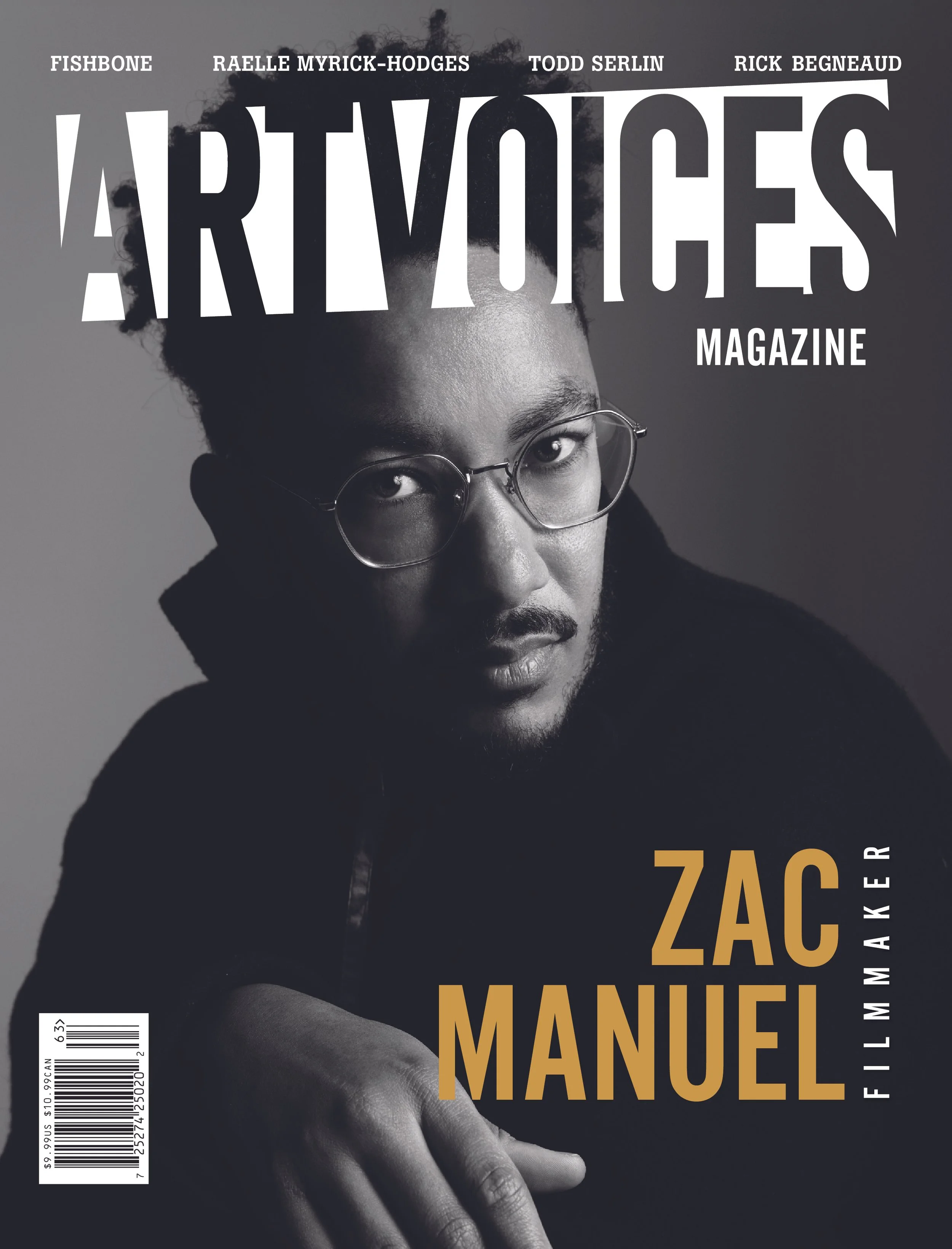
FILM IN MOTION: ZAC MANUEL CINEMA AS WITNESS AND THE ETHICS OF CONTEMPORARY DOCUMENTARY FILMMAKING
“I think what’s interesting about documentary - once you do a bunch of docs and interact with all kinds of different people around the world, it changes your view of social dynamics and social politics so much.”
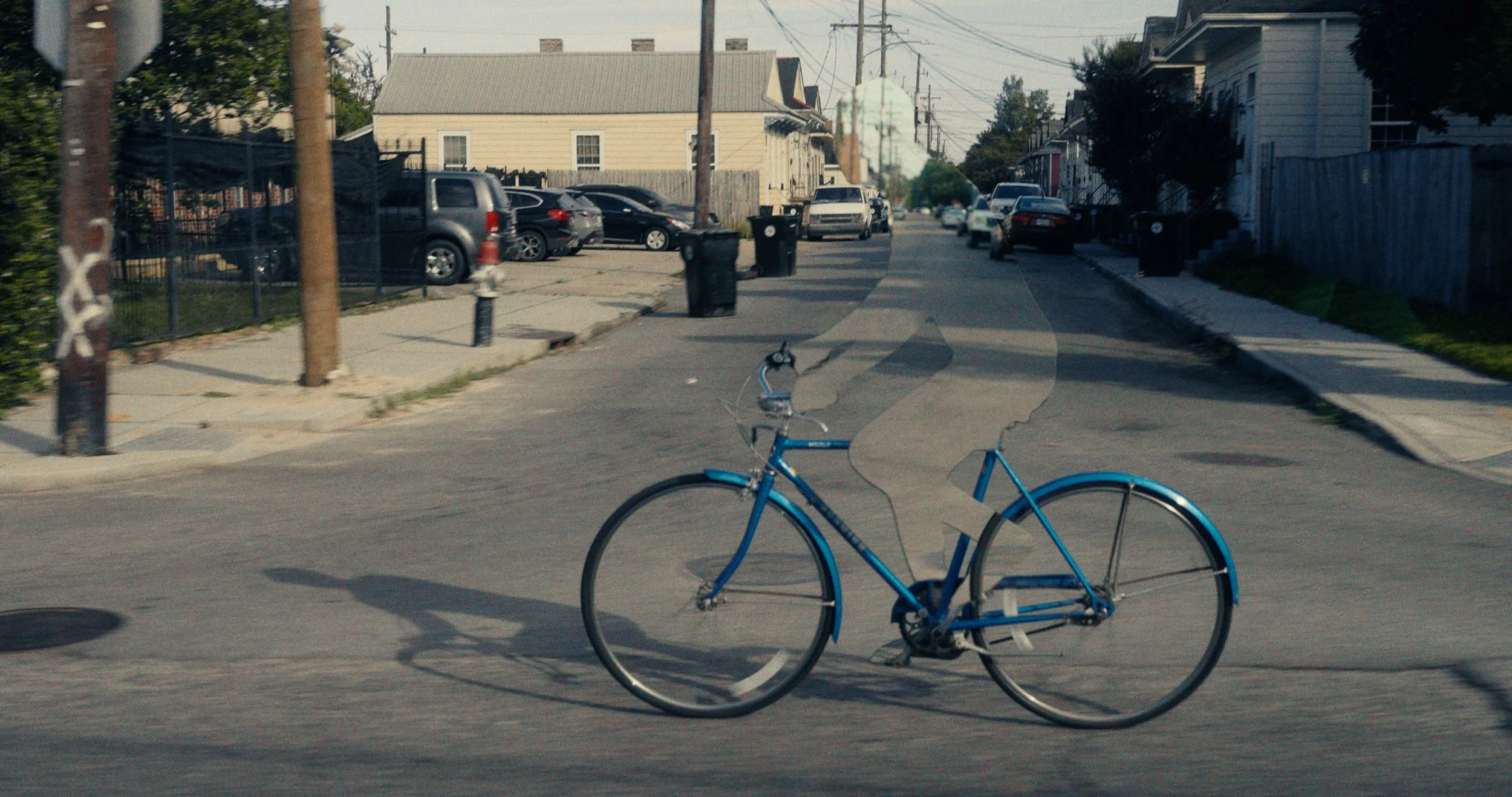
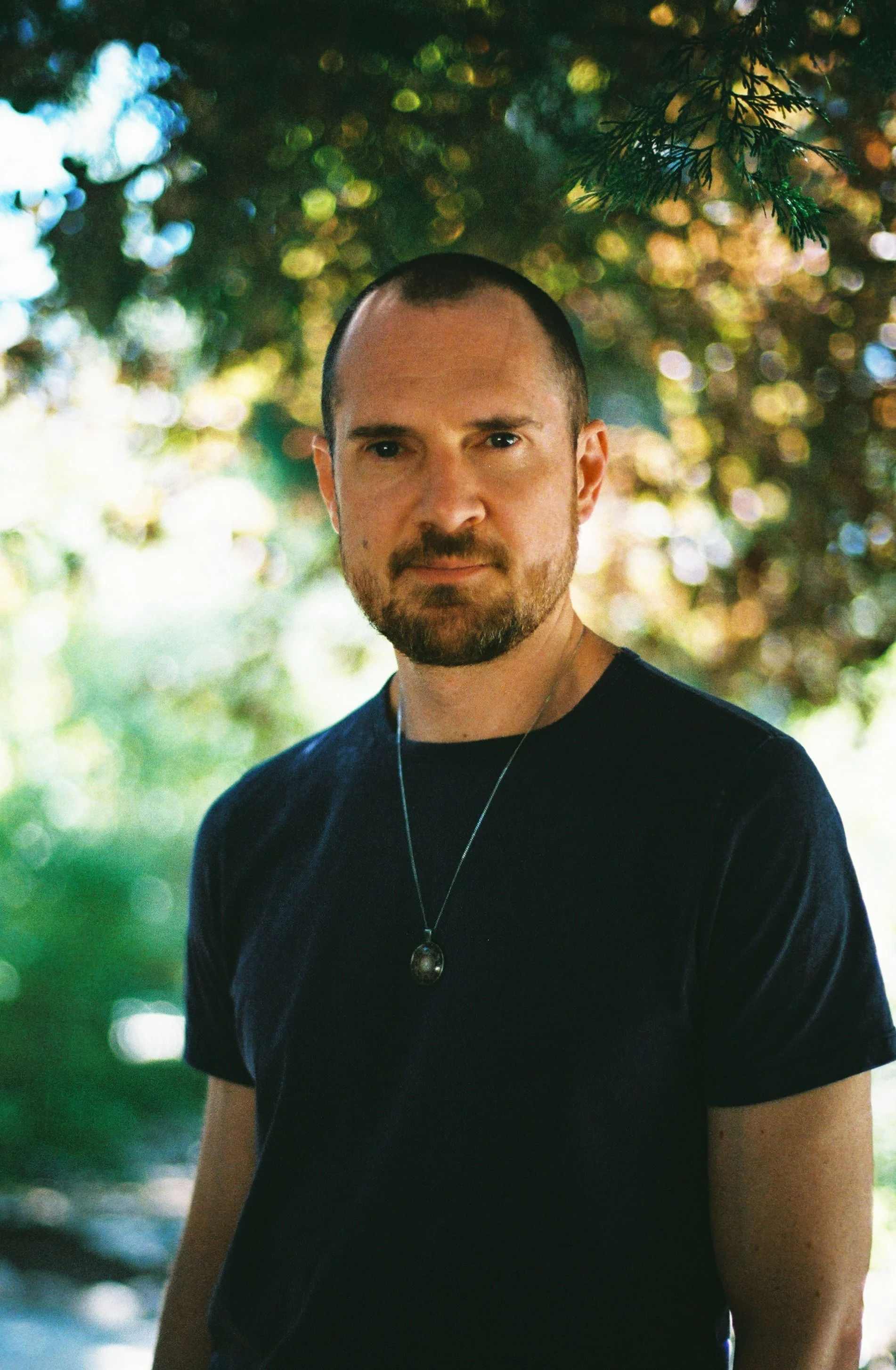
Zac Manuel has occupied cinematographer and director roles in numerous documentary films as a visual storyteller invested in Southern narratives, focusing on communities of color and Black New Orleans. Shorts such as Kalamu ya Salaam: Twenty Years After Katrina, 2025 (co-directed with Kira Akerman, featuring Manuel’s cinematography), exemplifies this commitment and showcase his adaptive verité filmmaking style. Recognition for Manuel’s cinematography includes an Academy Award nomination for Best Feature Documentary regarding Time, 2020, directed by Garrett Bradley, where cinema camera reels merge with home video and smartphone footage following Sibil “Fox” Richardson as she advocates for the release of her husband, Robert “Rob” Rich from a 60-year jail sentence.
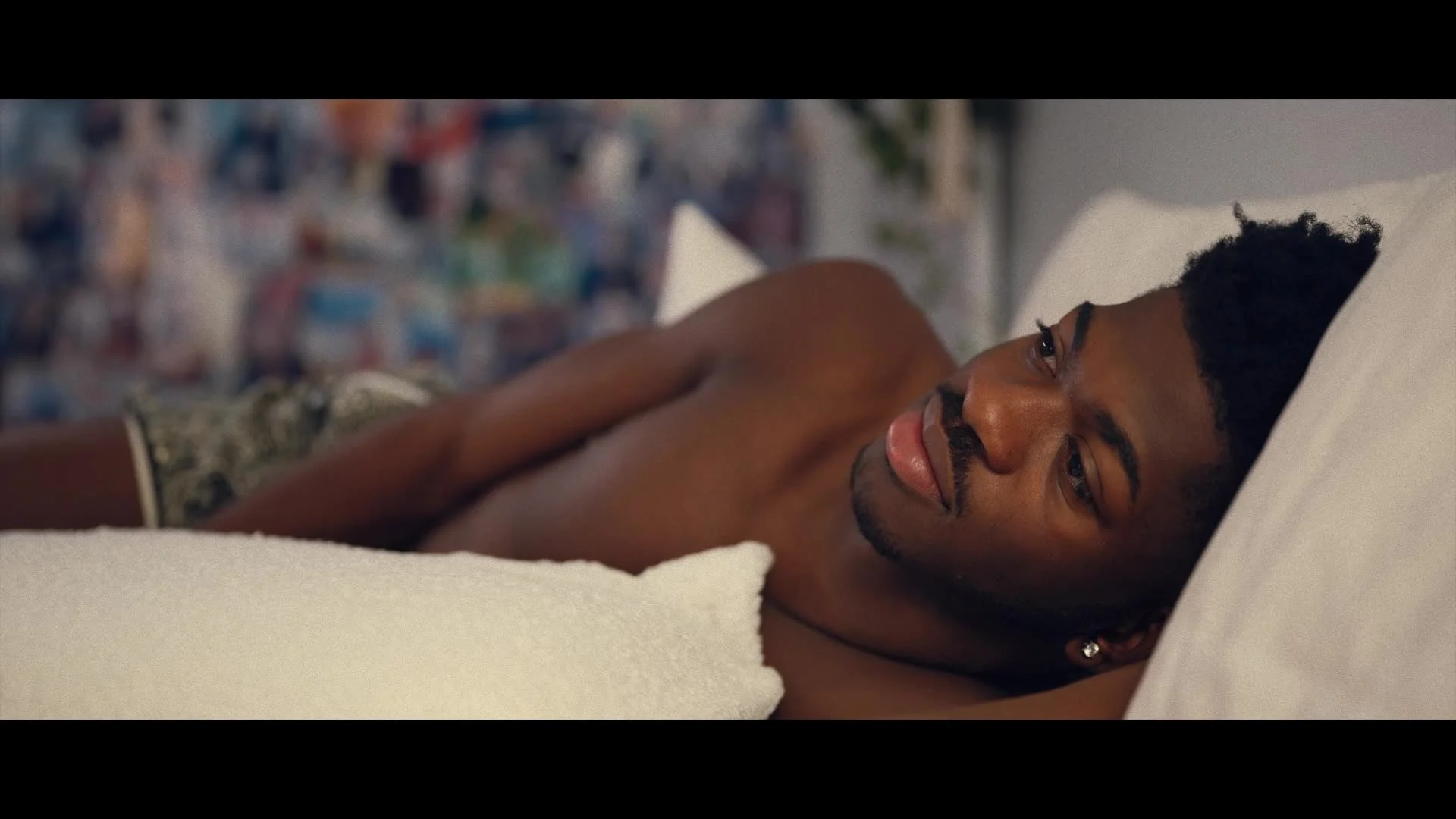
Manuel’s first directorial feature length documentary and concert film, Lil Nas X: Long Live Montero (2023), follows Montero Lamar Hill, aka Lil Nas X on his 2022-2023 tour, presenting intimate exchanges with colleagues, family, and fans in a mostly contained verité environment of well-lit stage production and interior rooms. His second feature length documentary as director, Ghetto Children (2024) was filmed over eight years and trails Young Juve, T.Y., and Lil’ Soulja Slim – the sons of iconic New Orleans rappers Juvenile, B.G., and Soulja Slim (1977-2003), respectively, through personal milestones, creative practice, performance, and intimate family events in verité style with archival footage. Manuel is a 2024Pew Foundation Fellow and a 2025 Diane Weyermann Fellow regarding his in-production feature documentary, The Instrument, with producer Darcy McKinnon. This film follows Manuel and his jazz singer father Philip Manuel in their journey to recreate their late patriarch’s singing voice through AI technologies.
Here are the excerpts from my conversation with Zac Manuel. This text has been edited for clarity and length:
Veronica Cross: So, storytelling was the impetus
Zac Manuel: I’m a visual storyteller, that’s where a lot of my practice started, and so I was interested in making images. I went to Chapman University in Orange County (Texas) and was thinking about cinematography as a career. Once I came back to New Orleans, I was shooting music videos, dance performances, a lot of theatre stuff, and writing short films, collaborating with short film [writers] and directing and shooting shorts. The availability and cost of equipment [created the] viability of making a good-looking product [for] the industry of documentary [films]. In 2012, I shot my first documentary with my neighbors who had a punk rock record label (Community Records).
VC: How important is it to tell stories about the people around us in our communities to you?
ZM: Those stories ... are what help us understand the world in a better way. I think what’s interesting about documentary - once you do a bunch of docs and interact with all kinds of different people around the world, it changes your view of social dynamics and social politics so much.
VC: How do you establish trust with your subjects, so that they can be comfortable and be themselves on camera and a crew in their space and often [in] their face, especially in verité filming spirit?
ZM: I think the first thing for me is ...choosing a team that I know is going to ... move around the world with a sense of care and empathy. So, even in my early practice, if I’m interviewing someone, and they ask “Where do you want me to be? And I reply, “What’s this setting for you that just makes you feel like the most comfortable version of yourself?”, and then I’ll work around that.
VC: Like meeting people where they’re at. How did you develop that muscle in the filming of Ghetto Children, over eight years?
ZM: I went into that project with a lot of presuppositions. I’m from New Orleans, and the guys – their fathers’ music had been very integral to my experience growing up. If you were cool, or if you were a young Black male, you probably listened to Cash Money and No Limit [record labels]. I learned that we had a lot of differences, both socially and [in] our systemic experience in the city. I wanted to initially make something that was short form – we had planned to shoot for six weeks; with my producer, my producing partner, do “get in, get out” interviews and make a story that was pretty cut and dry: these kids of famous fathers are doing their own thing, in a “will-they-or-won’t-they succeed” kind of vibe. The more that we were in their space and in their community, I think the more it became about the diligence of time, the space, the patience of spending endless hours with them, and witnessing how they moved around the world.
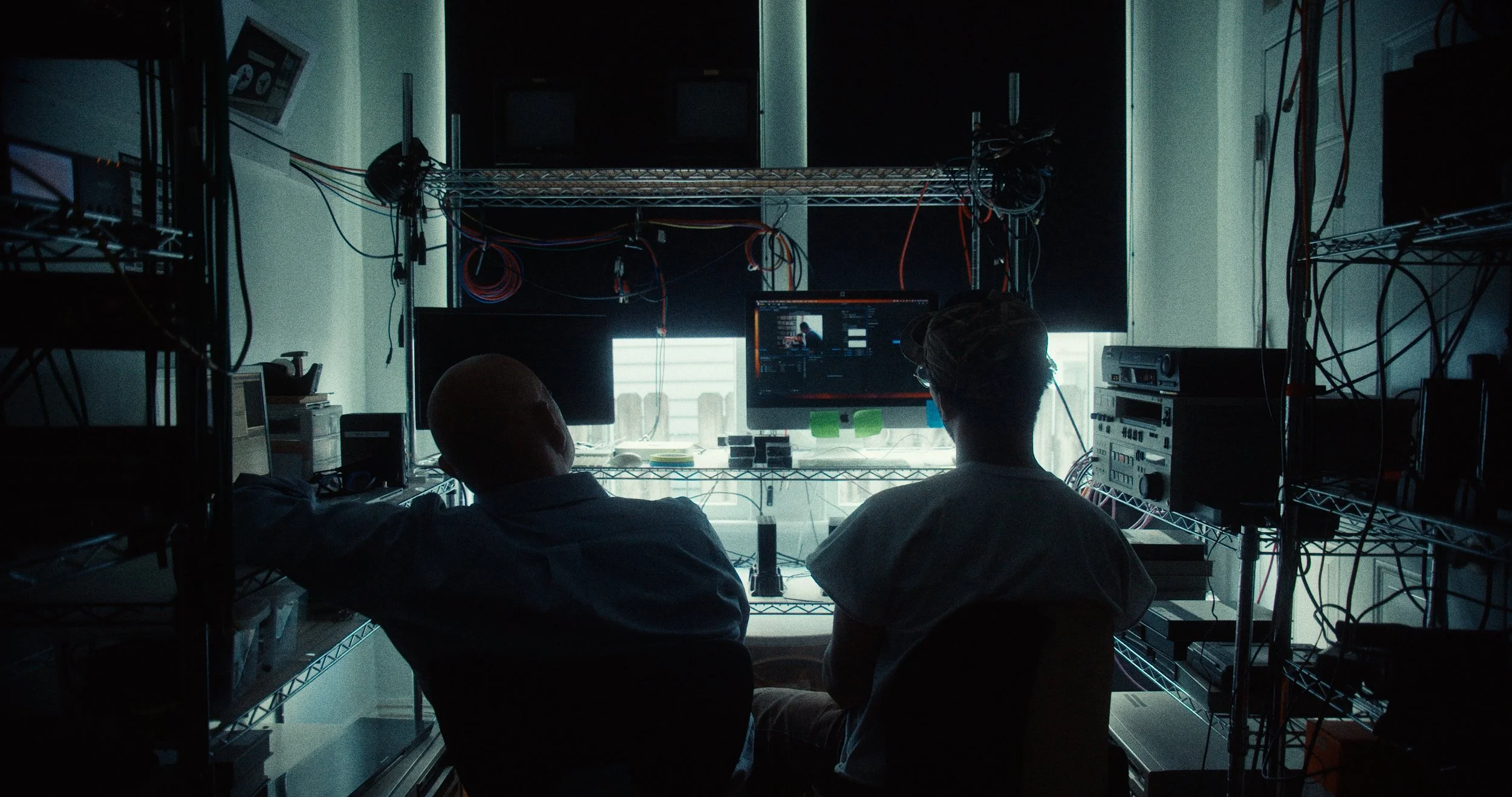
VC: What was it like to witness [and film] intimate scenes such as Lil Soulja Slim’s girlfriend Carol giving birth?
ZM: We realized somewhat early on that [to] film something, we had to also build relationships with people in their community. I developed a friendship with Carol, Lil’ Soulja Slim’s partner at the time. Carol wanted her story to be documented in a certain way, so we shot a doctor’s visit, on a Thursday or Friday, and Carol was very pregnant. We had permission in place... before we went into the [delivery] room and talked to Carol [about] where we should be. “What do you want us to see? What do you not want us to see?” It was an unsaid “be tasteful, be respectful”.
VC: As a viewer, it was such a relief to see empathic filmmaking in these big moments [in the] story that could be very sensational. Yet, there’s nothing about it that’s sensational throughout the film, it feels humanist. And then the video call from jail [in the final scene], how did that happen?
ZM: B.G. is the father, but T.Y. is the son, and we had developed different relationships with people. He (B.G.) had something that he wanted, and Young Juve had a relationship with his dad, and Lil Soulja Slim’s father was deceased, so I think that’s the desire that drove him. But I think for T.Y., knowing that his father would be out of prison eventually ... his sense of patience and understanding of what we were doing as filmmakers, and what he could offer as a part of the story.
I wanted the story to be about this triptych of young men who came from similar but very different experiences. T.Y. and I got super close, and when he (B.G.) went to prison, it was kind of unexpected. I tried to visit him in Plaquemines Parish Prison, but they wouldn’t allow visitation, because they still followed these COVID policies. So, we would do these regular check-ins on video calls, and I would film them, and it became another component of the storytelling.
VC: You never really know as a viewer how much time is going into what you see on the screen. And how important it is to see [that scene] from that vantage point, as a loved one would be visiting with their incarcerated person. How important is light - institutional, domestic, natural - as a narrative component to your storytelling?
ZM: I think about framing in conjunction with light as access to a character for the viewer, and that’s important in documentary. There [is] a trend of showing people in this very frontal
way that can be beautiful, impactful, and necessary in storytelling... It’s like a privileged viewpoint that as an artist, I had a problem with specifically, especially in Black film and Black documentaries. There was something about it that reads extractive to me
- extractive of the gaze, extractive of the identity. I’m working on a couple different levels, which is what the light is doing, but also, what’s my access, and what’s the viewer’s access to a moment, and it really determines a lot about how I frame people: how much you see their face, or from what angle you see it, or if you see their face at all.
VC: In your documentary Lil Nas X: Long Live Montero, how engaged was he in how his image is presented?
ZM: I was hired to capture this lightning strike moment of Lil Nas X as a generational artist going on tour for the first time. I tried to meet him at the level that he was at. Over time, we would do 20- or 30-minute interviews with him, and eventually it started
to feel more intimate. Carlos López Estrada came on [as co-director] and set up these confessional installations at different sites. [Lil Nas X] would come into the studio to watch edits.
At one point he stood up on his chair and started dancing and singing. After we finished the edit, he was like, “I want to film something else”, a dream sequence ... with the younger version of Montero watching the TV, [then later proposing] “let’s shoot the scene where it’s my awakening as a young person”, and so Carlos and I flew to flew to Atlanta with a very small crew, and I would say that Montero essentially directed that [sequence].
VC: Regarding legacy - how do you feel that the process of filming Ghetto Children prepared you for making The Instrument?
ZM: I think most of the work I’ve done is trying to parse out father-son relationships, even in Lil Nas X: Long Live Montero, there’s some interrogation of his relationship with his dad. But I think working on Ghetto Children for so long it I wouldn’t say that it presented itself to me explicitly, like, “now it’s time to turn the lens on myself”. I don’t feel like it has prepared me in a way, but it also is still very difficult to be on camera, and to be interrogating my relationship with my father in the space of a documentary.
VC: The title seems well suited to the assumed objectivity of AI, the instrument. Do you feel like you’re traversing two sides of subjectivity and objectivity, or do you find the process of recreating your grandfather Vernon Manuel’s voice and making this film to be more nuanced than two sides?
ZM: The title came almost first. I was thinking about grief science and doing a lot of research in these emerging technologies that were changing our relationship to death fundamentally, psychologically, physically, and then I was thinking about my dad, and his voice, and at the time he was feeling like he didn’t know how much longer he could be a professional singer and
a performer. So, I was thinking about two things: one, this tool that was giving life, and then this other tool that had given my father life and purpose, but was also kind of starting to fade away, and so the title came pretty quickly, and I think it allows for a space of both subjectivity and objectivity. Artificial intelligence is the subject of the film, but it’s also like a point of critique and a point of interrogation, and so as we are attempting to use it to do something that is maybe controversial, yet both technical and spiritual in a sense. We’re also opening up our process to interrogate what it means to be using such a tool for such a means, and who has the authority...to be to be a resurrector of sorts, who has the authority to bring things back that have passed, who has the authority to discover new things, or to bring them into the world. I think working off that theme of “these are tools that give life, that change life” has allowed the process of making this film to feel super dynamic, like we’re doing all sorts of stuff that I’ve never done in any other project before, scripted or non-scripted or music videos that for me feel very revelatory in terms of how I’m thinking about my own process as a storyteller.
A lot of it is not AI, like some of it is AI, and I think what I, as a person who’s like process-oriented, I want to keep the AI to a specific process, to the process of thinking about memory, or thinking about voice, or abstracting voice, and I’m not super interested in creating human likenesses through artificial intelligence, more or less; there’s a couple little experiments that I’m doing, but they’re based on how technology interprets nuanced Black identity, also on the one hand, if I can only use artificial intelligence for this one means, and it’s kind of essential, like in the representation or the reconstruction of something that’s very essential to my family’s legacy, in in the ways that I’m embodying the other parts of my family’s legacy, how can that process be more embodied and less technical. AI technology is pretty emergent, and just in the past couple years, and the speed at which it’s growing, there’s not really psychology behind it. People are studying [it], and there’s a lot of papers and dissertations published just in the past couple years about what they call the terra incognita, but that kind of human technological relational impact, it’s split my practice into both thinking about how to work with technology, but also thinking about how to embody people or how to embody memories in a way that I had never thought about before, and that’s been a really good opening as a storyteller.
VC: Do you find that there’s bias in AI in the available resources it culls from?
ZM: Yeah, that’s, that’s a loaded question, because I feel like in the development, or even just in the usage of the technology ... if you’re talking about data centers, which run the technology, there’s the bias into where those data centers are being built, and what communities they’re disrupting, in order to allow, say, faster trading in the stock market, and Meta’s use of LLaMA (AI models) system [to run] more efficiently, which I don’t even know what that does. But that’s essentially what what’s happening in Richland Parish, Louisiana, right?
VC: Yeah.
ZM: I think a lot of these technologies cost money, so there’s a type of bias in terms of what your financial situation is like – can’t afford all these technologies because there is going to be a class distinction based on what they offer versus what you can give these companies like ChatGPT, or Open AI [which] started as a nonprofit. It’s [a] totally a for-profit entity, you pay for the highest service, and obviously, it’s gonna be like streaming, being structured more in that capitalist way. A lot of the research I’ve been doing now is about emergent technologies as they come up, [such as] sound technology, sound recording, what led to the invention of the telephone. Sound recording technologies were developed to try to codify correct speaking language and to create a hierarchy of what language was supposed to sound like from a white male dominant American perspective, and so much of that spirit is still baked into the ways that... current technologists are thinking about how they can further develop their technologies. They’re not trying to represent nuance, they’re not trying to be humanist in a certain way, they’re trying to create hierarchies of understanding and hierarchies of identity, and I think they’re not even invested in life on this planet. I mean, they’re really invested in the transcendence of life into, I guess you could call it transhumanists, or in beating death. I think a lot of people, a lot of technologists, their ultimate goal is to try to figure out a way to extend life or to not die, but that in and of itself is like about, about thinking that you are the dominant force.
VC: Supremacist, yes.
ZM: It’s super supremacist, so that the bias is baked in, but it’s also been baked in for so long, and the more I research, the more it is the same story being told over and over again.
VC: Right? And consider that maybe the resources the machine is pulling from are not balanced for certain groups of people.
ZM: Because I have been having a hard time, and because we were working with this one company [who] tried to make a cone of my grandfather’s voice from like the small sample of his voice that we have, and it didn’t sound right, and someone [said that] they should be paying you to contribute your identity or your grandfather’s identity and voice to the software, which makes it more diverse.
VC: Yes!
ZM: Simultaneously, they should be paying people of Nonwhite male dominant identities to contribute, but also should we ... do you contribute to the thing that is ultimately going to be a part of the system of the overlord? I also feel just as strongly that AI technology always becomes the oppressor of marginalized people. I think there are equivalent pros and cons to each one.
VC: So, do you think that this may be an important contribution to say the canon of Black [vocalist] artists in New Orleans?
ZM: I hope it’s an important contribution to myself, to my family. I don’t think that I make work that is popular to a wide audience, but so then I was like, what’s the value in this sound-making, and I think we as a family like it, it’s begun to write a story of our family in a way that feels really beautiful, but also it feels like it’s something that we can start to pass on, connecting into something that feels very essential, which is music, but also it’s just our voices, like the primordial form of communication.
VC: Can you tell me more about Vernon Manuel’s world? Did he self-identify as a singer?
ZM: I don’t know if he would identify as a singer. He was a custodian at Tulane. He painted houses. He never left a five-block radius. My dad always talks about [when] they would go to this corner grocery store uptown, and he would start singing, and my dad would join in, and people would stop, or he’d be sitting on the porch, and he would start singing, and the mailman would come, and the mailman would stop and listen, or he would be at the bar, and my dad was at the bar, and he would start singing, and people would just stop and listen. A lot of times he sang with family in the kitchen at his sister’s house uptown, and I think that was how they enjoyed spending time with each other.
This film, in whatever way it can, is a space for people to think about their own legacies and families, and where they come from, and who they’re with right now.
VC: That’s what art can do for us.