IN THE STUDIO: ERIC YEVAK THE STUDIO AS LABORATORY
“For me, the choice to work in an abstract form is simply the freedom. I love the representational. There is a power and majesty in it that is hard to rival. I’m drawn to mystery and the things I can’t quite see.“
In my humble years of trying to understand, discern, and evaluate art, I have come across varying conclusions. Some art is simply beautiful. Perhaps not very original, but the sheer beauty of the result is worthy of admiration. Reciprocally, you may come across visually tame art but tremendously deep in concept and thought. You think to yourself... so interesting!
Additionally, some artists use new and innovative material that has never been presented. Others introduce unique methods of production. How remarkable and novel! Some have a story to tell, others just a thought.
Regardless of these different paths of evaluation, the ability to look at a piece and discern whether it is good or bad, though obviously a subjective process, can come naturally to an experienced observer of the arts. In all its magic, the trained eye somehow gazes upon a piece and instinctively grasps its effectiveness.
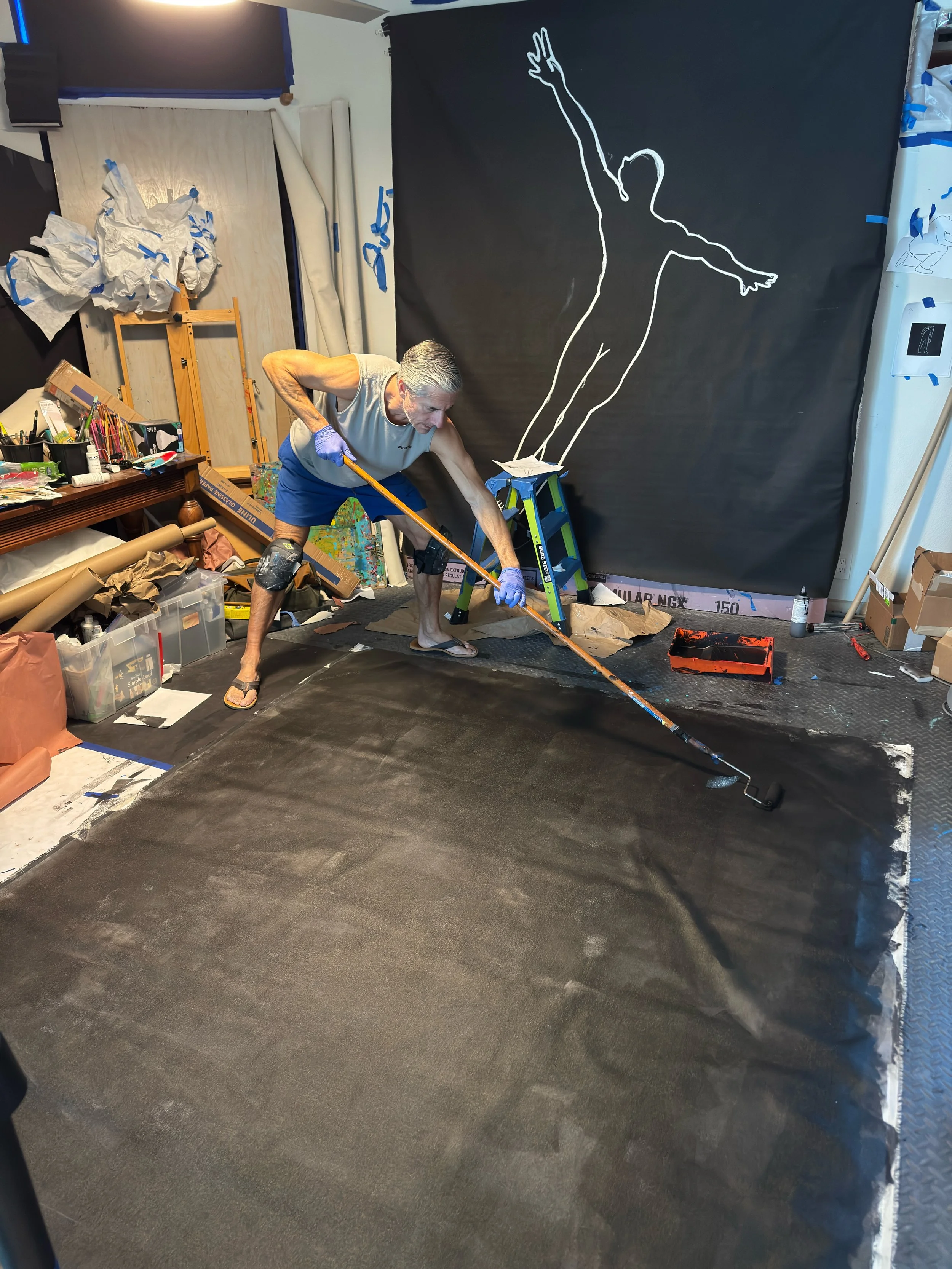
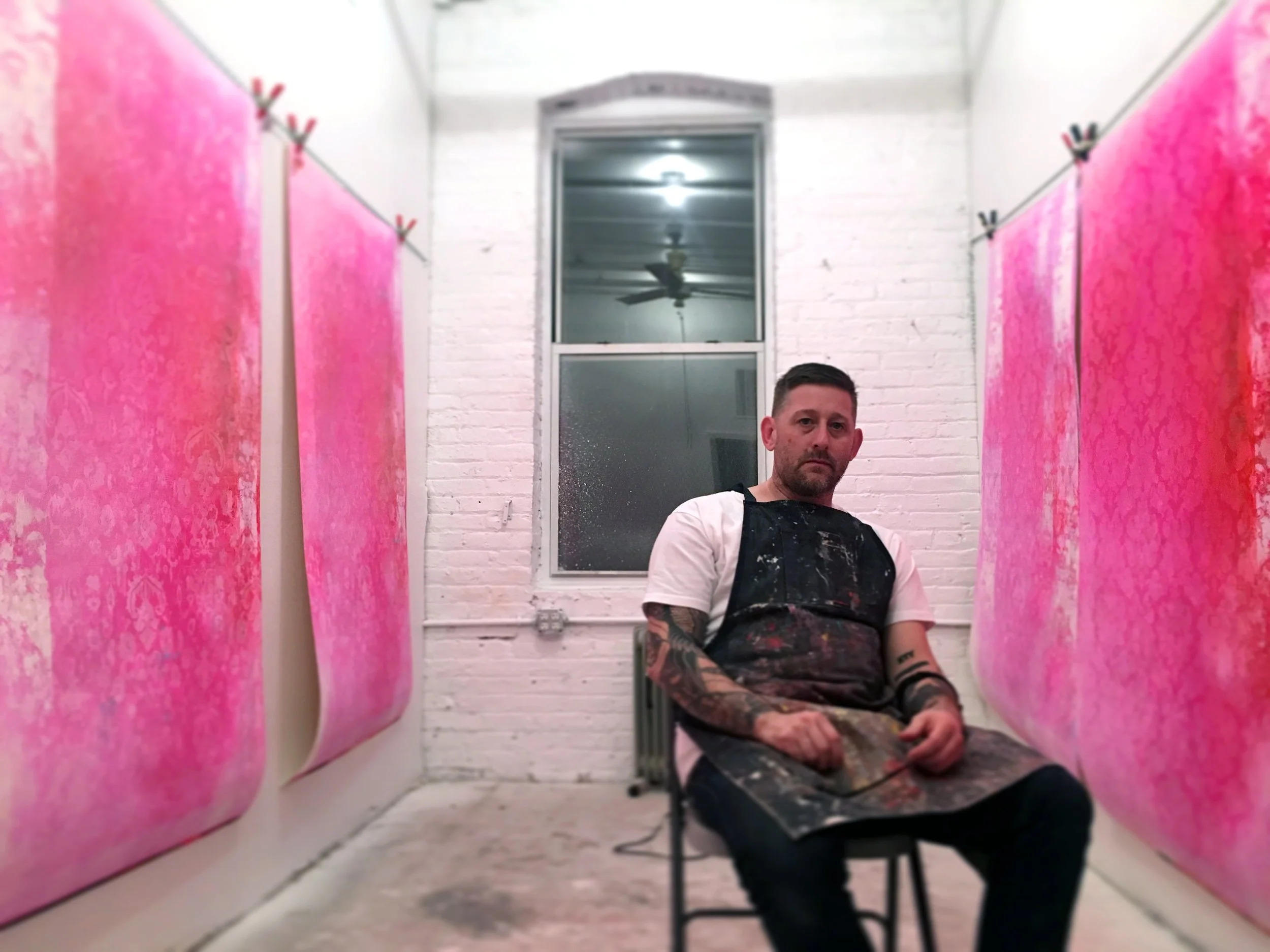
Recently, I walked inside Yevak’s art studio (I was familiar with his art at that point) and immediately sensed his excitement. Like the moon’s gravitational pull, our attention turned to a piece that he had just completed. Here was one of those times. A magnificent piece, I instantaneously surmised.
Eric Yevak’s work has matured over the years. The pieces are now more detailed and involve numerous materials and variable methods of incorporation. There is more depth and a need to look deeper to appreciate. There is a growing confidence in his craft and technical skills compared to his older works. He is mastering his abilities and finding his source and inspiration through the work itself. Yevak has found his direction by digging deeper and searching further. There was never any doubt with regard to his knowledge and skill base. The extensive processes he goes through with almost all of his pieces, is worthy of recognition. The labor is meticulous, repetitious... requiring patience and an acceptance of the time needed to reach one’s destiny.
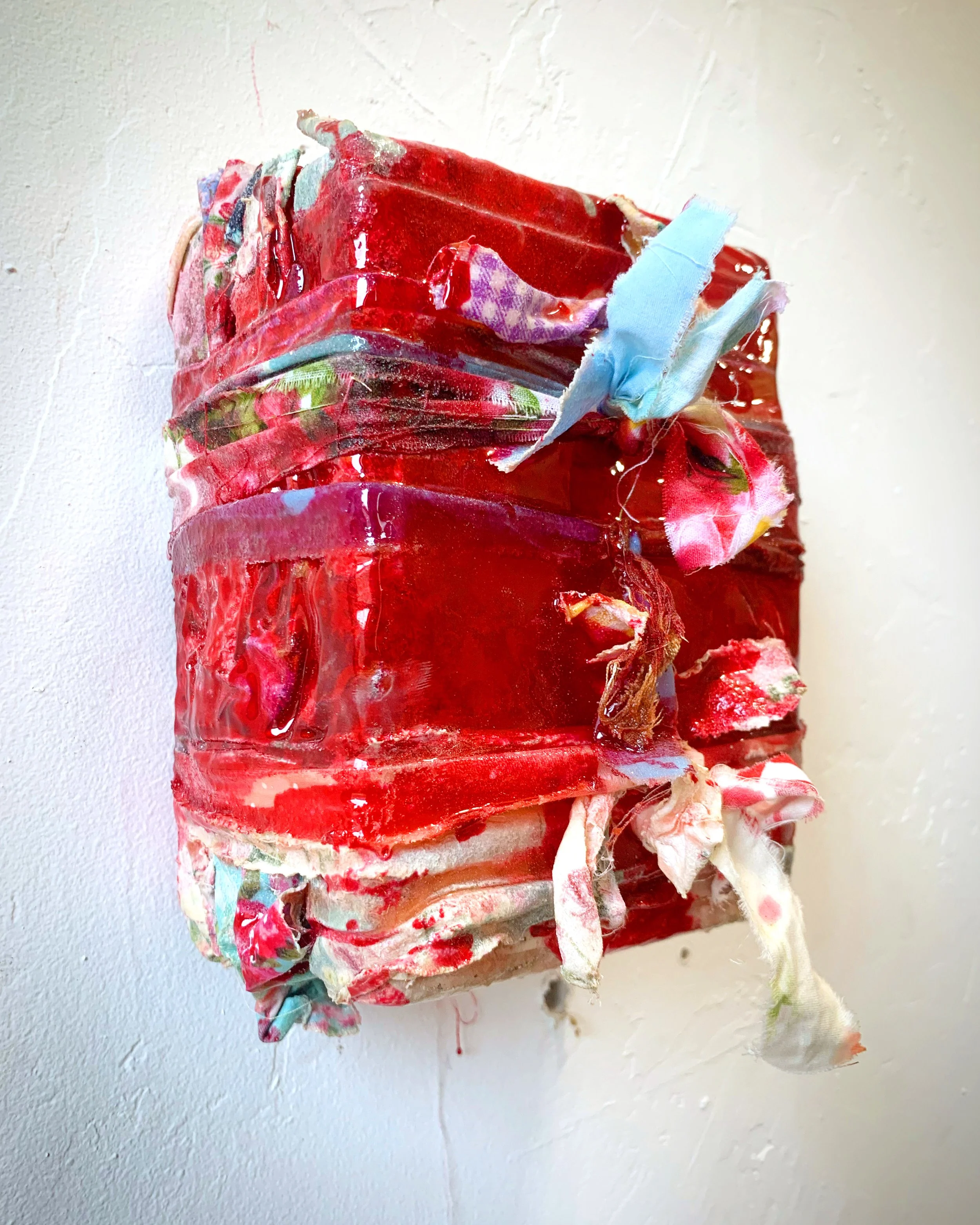
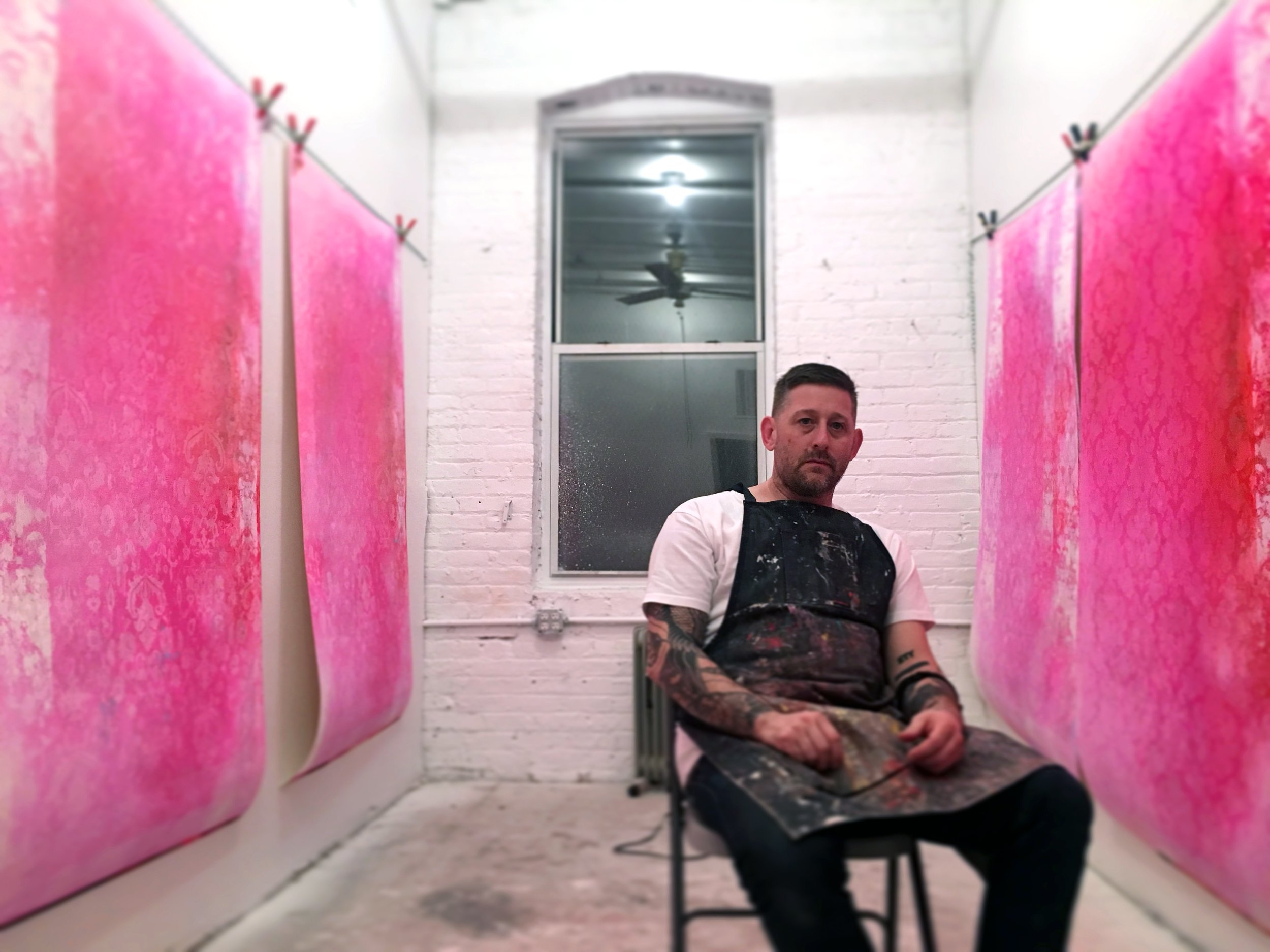
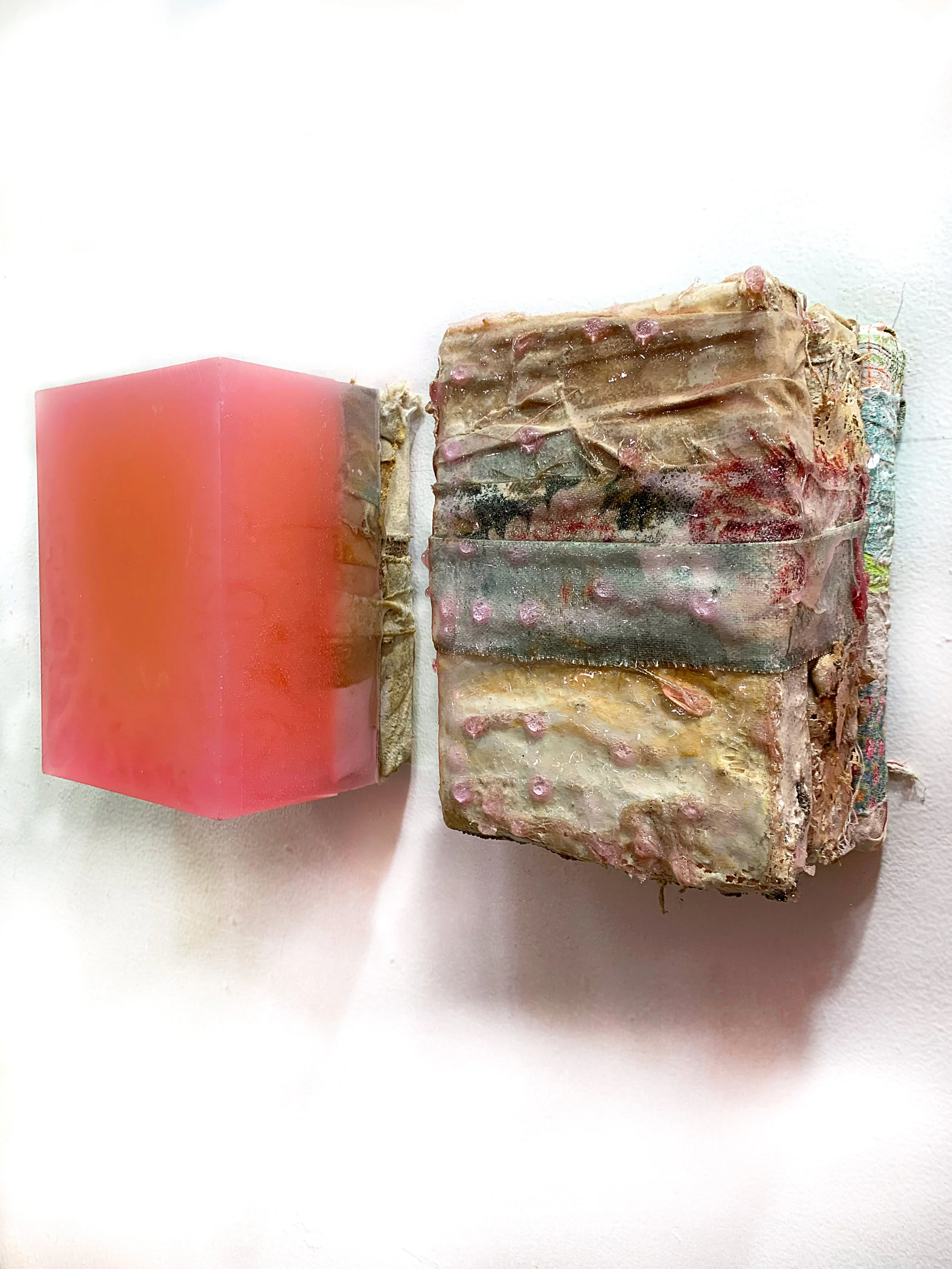
“The size of the work is based on the dimensions of my body. Height and wingspan. That ratio is used throughout the work. In all of these pieces, I start with a simple wooden frame. I take raw linen and cover the frame. I proceed to then layer raw canvas and cotton sheeting upon older layers. As I drape the material across the piece, I layer and fold the material... Between each layer of folded fabric, I distress the previous layer. Giving the layers life, visual textures, and experiences... The fabric I soak in plaster and simple pigment. I distress the pieces with powered tools and hand tools. In between folded layers, I also add treated plaster and pigment. When I feel like the piece is ready, I start the “sealing” process. Sealing involves layering
and coating the top of the piece with industrial resin. This bonds the piece, making it permanent. Locking heaven to earth.”
Yevak works in stages. Each phase has its own beginning and end. Yevaks investment in each stage is personal and important regardless of whether it will ever be recognized and seen. We are left ultimately with a canvas of enigmatic layers. Observing Yevak’s work closely, you can discern some of these levels and layers. At times, some of the work can seem relatively monochromatic at first, but then more translucent and indicative with each step forward, revealing its experience. The layers, like monumental memories hidden deep within one’s psyche, that may never be fully known. Yevak will often refer to and showcase a stage of an unfinished piece. The “underpainting” he calls it. Those parts of the piece we may never see in their finality. Other times, he will have reached a stage of a painting that perhaps represented conflict and felt violent in its delivery and declare a “time to heal.”
And so, this art has become a living thing with emotional characteristics. So, what is going on? What is Yevak doing, and is he saying something? Or perhaps, is this just a deeply personal experience he is sharing with us? Or hiding from us.
Yevak was born in the South. Born into a poor and deeply religious family of the Mormon faith that demanded strict adherence and obedience. Doing the work of God, through the fear of God. Yevak experienced religious indoctrination early on. He fought it, challenged it, but also gave in to it. There was some acceptance, so he pondered the work and its rituals to make sense of it. The wisdom gained was derived from the hard lessons in his life, and Eric Yevak was on his way. Religion was not the only narrative in the household. An early foundation in the arts was laid down by way of his highly artistic father. Yevak took a liking to the arts early on. He sensed that there was perhaps a parallel portal between art and religion. Perhaps the same experiences that marked him could be felt, shared, and explained through art. A natural calling to the arts ensued. He went on to get degrees in photography and graphic arts. Later, a master’s in fine arts from the Minneapolis College of Art and Design.
Yevak continued to hone his work with different mediums, including sound and film, oftentimes experimenting with mixtures and mediums. However, it was an experience with Rothko that illuminated “abstraction” and sent him onto his current path. He found a spiritual connection with the Zen-like paintings. Rothko wrote, “A painting is not a picture of an experience; it is an experience.” Certainly, one can see the meditative similarities on the surface, but upon closer observation, Yevak’s work also presents a somber struggle. A duality of emotion reveals itself to the observer. Reminiscent of his youth when he both rebelled against his religious upbringing but also greatly wondered upon its mysteries and magic. Yevak cultivates this theme and tries to come to a finality of this personal but empathetic conflict with the bonding, wrapping, and sealing aspects of his work.
The basis and foundation of his artistic expression had taken form. Like abstract art, there was no clear explanation of the divine. Yet, for those who have a certain openness and sensitivity, you could experience its beauty and glory. But how would he capture it?
“For me, the choice to work in an abstract form is simply the freedom. In abstraction, there is a power and majesty in it that is hard to rival. I’m drawn to mystery and the things I can’t quite see.”
Yevak started to work with concepts of color and developed an organic rose pigment that would stay with him to this day and can be seen in many of his pieces. One can’t help but think of its vulnerable, somber skin tone and seemingly living nature. He started to play with different printing and graphic designs that he would apply, and so the sense of layering began. He played and meshed with the various mediums. A recognizable and developing theme in its infancy was taking shape.
During the lockdown, his art took another step forward in its sophistication. “We were all left to ourselves.” Isolation and times of deep reflection. Yevak recognized that his “spiritual ancestors” did do with what they had. As an artist, Yevak was left with the materials at hand. He decided to do an artistic pilgrimage of sorts, to re-enact the heritage of his past and its significance. His creative mind went searching as those did during the times of the “Mormon Exodus.” He started toying and fiddling with fabric. Carefully folding and tying them. Reminiscent of the careful folding of cloth at the sacrament altar during his youth. A symbol of protection, reverence, and closure. Yevak began to experiment and learn the ancient human arts of sewing and sanding. Sealing and bonding. With each piece, there was a constant gradual “redefining.” Sometimes, sanding away certain layers and reapplying different “resins.” This process is symbiotic of our lives—a continuous search for our true essence. What we have in the end are all pieces (spirits and souls) that have undergone the same process but have found unique and different endings to our fragile and storied lives.
“Layers stacked. The sealing starts with ties that bind. It feels like that would be enough. It’s not. There needs to be a more intense process. Heat. Of some sort. The sealing is meant to last through all the glories. Was the Garden a Temple? Temple/Garden.”
Today, Yevak is reaching a high point in his pleasure with the work. It’s as if he has done the work and now, is seeing its developed maturity and understanding.
There is much to admire in Yevaks work. Aesthetically pleasing to the eye. Conceptually sophisticated. Skillfully demonstrated. He has thoughtfully brought together the different important facets of art and narrated to us a story that is both universal and personal. A story that continues to grow. An artist who continually searches for ways to connect himself and the viewer to the mysteries of an object and possible connections to our past. There is both a simplicity from afar, and a complexity and sophistication from near.
There is not just a story here with Eric Yevak, but perhaps a template. A sacred covenant for a more righteous path. A process by which we can live our lives with respect to the different elements of life and our universe. Finding a way to bind and make peace with our memories, both bad and good. Each layer we must understand, unfold and respect. Infant innocence, “stripling” growth and destruction, adult acceptance and healing. It takes work and time. Patience and understanding. Yevak has brought together the many complexities of life and art and successfully presents us with a magnificent story.