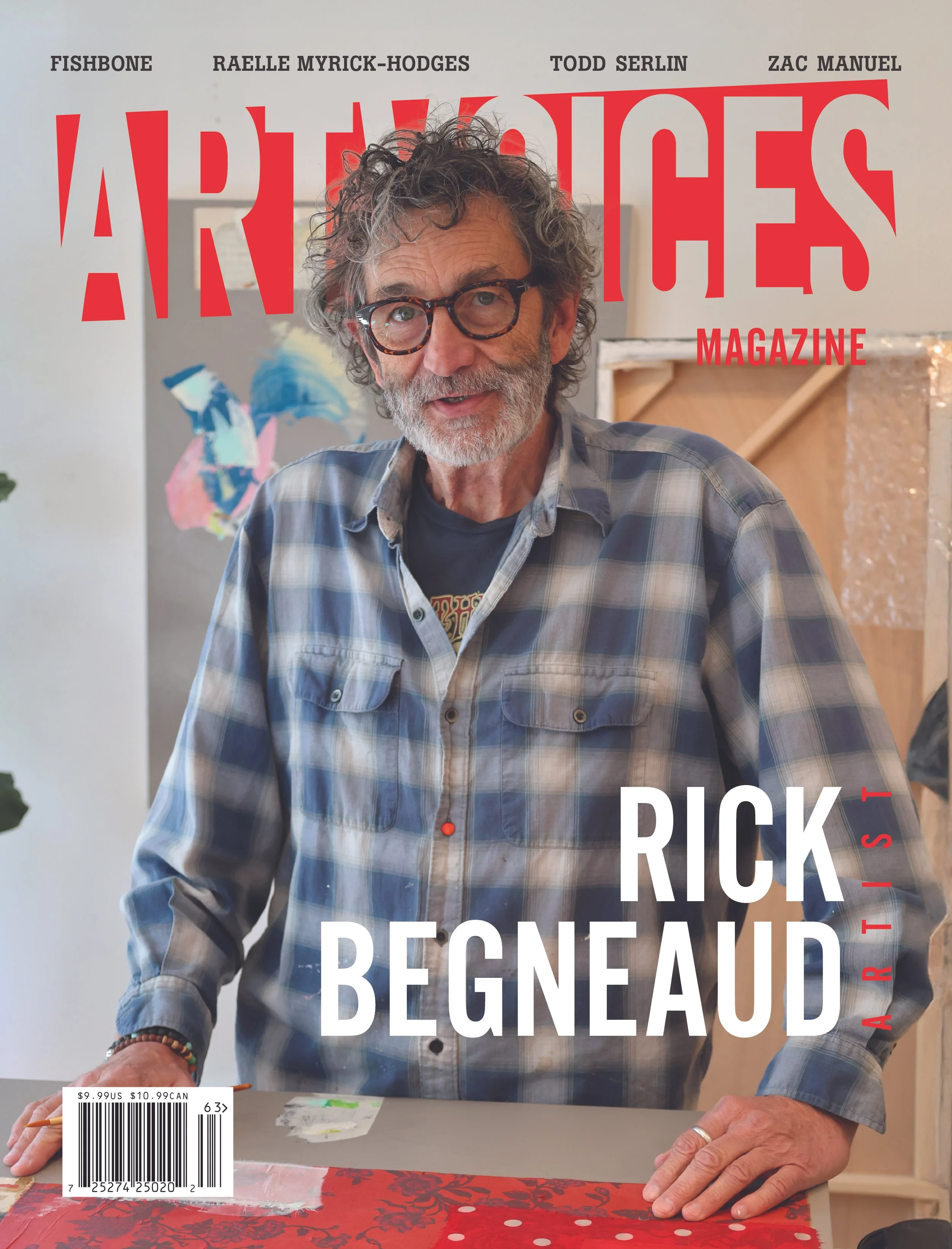
THE ESTABLISHED ARTIST: RICK BEGNEAUD INNOVATION, MATERIALITY, AND AN AMERICAN ARTISTIC LEGACY
“Rauschenberg (Bob) became much more than someone whose work I admired. Spending time with him - living in his New York house, visiting him in Captiva, traveling, talking, and simply watching him work - gave me an education that no art school could have offered.”
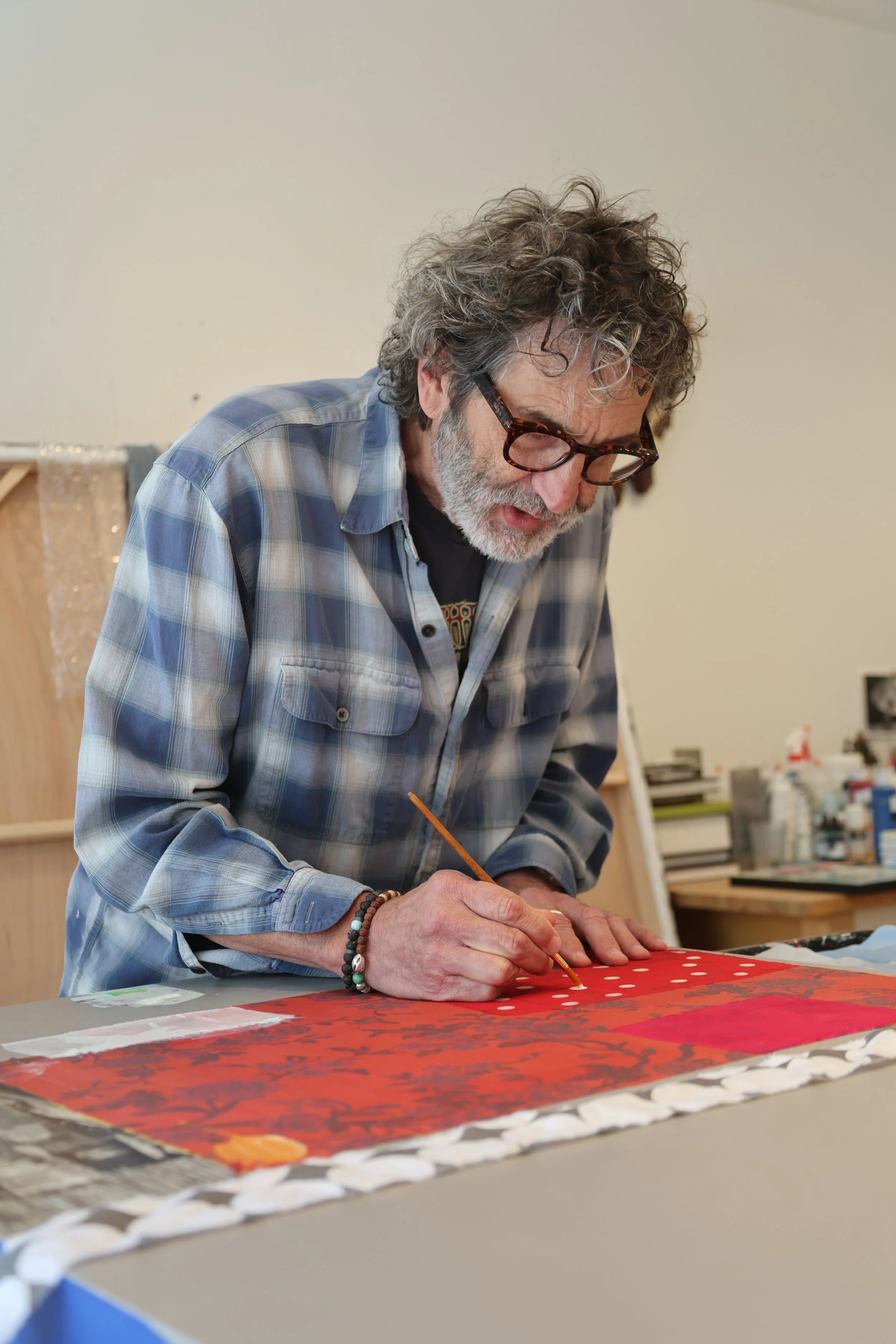
The history of contemporary art is shaped not only by singular artistic achievements but also by the relationships, collaborations, and shared intellectual communities that sustain creative innovation across generations. Within this continuum, artist Rick Begneaud occupies a distinctive position. As the nephew of Robert Rauschenberg, one of the most influential artists of the twentieth century, Begneaud has inherited a remarkable artistic lineage while developing a visual language grounded in his own material investigations and conceptual concerns. His practice reflects an understanding that artistic legacy is not preserved through imitation, but through an ongoing commitment to experimentation, curiosity, and the fearless expansion of artistic possibilities. Together with artist James Macdonell, Begneaud represents a generation of artists whose work continues to engage the spirit of innovation that defined Rauschenberg’s career while contributing new perspectives to contemporary abstraction and material practice.
The relationship between Rick Begneaud and James Macdonell extends beyond friendship to a shared belief in the importance of artistic inquiry, collaboration, and the enduring relevance of postwar American art. Both artists understand Rauschenberg’s legacy not as a fixed historical achievement, but as a living dialogue—one that embraces risk, interdisciplinary thinking, and an openness to discovery. Rather than seeking to replicate Rauschenberg’s aesthetic, Begneaud and Macdonell honor his influence by advancing independent practices that value process, experimentation, and intellectual rigor. Their connection offers a compelling example of how artistic legacies evolve through mentorship, friendship, and shared creative values, demonstrating that the most enduring contributions to contemporary art are those that inspire future generations to challenge convention while remaining deeply engaged with the cultural and historical questions of their own time.
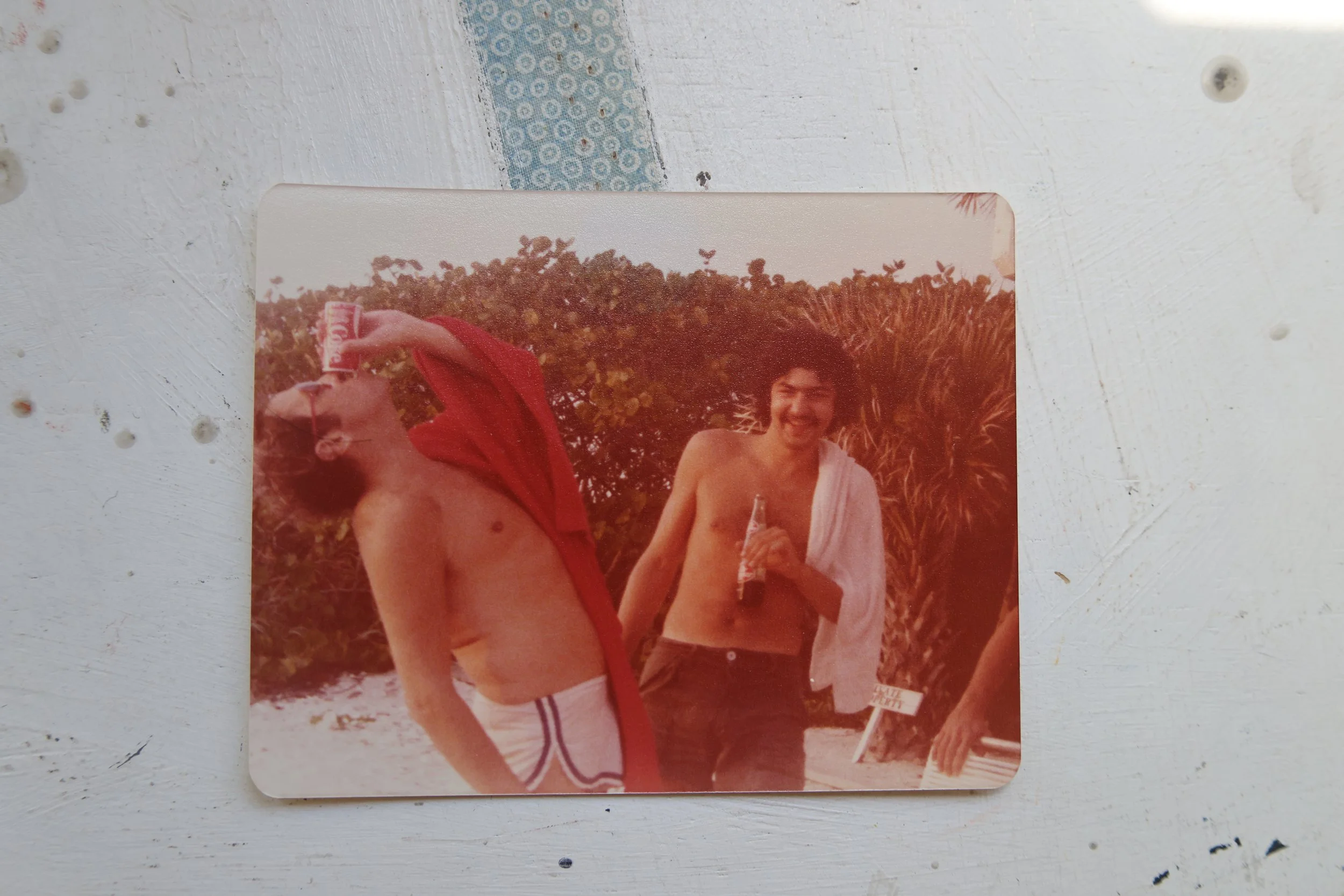
Terrence Sanders-Smith: Can you describe the formative experiences that led you to become an artist?
Rick Begneaud: People ask me what made me become an artist, and I’ve never really had a good answer for that. Looking back, I don’t think there was one defining moment. It was really just a lifetime of experiences that slowly shaped the way I see the world.
I grew up in Lafayette, Louisiana, and that landscape left a permanent mark on me. Some of my earliest memories are watching the sun come up over the marshes, duck hunting with friends and my dad, fishing in the Gulf of Mexico, and spending nights a hundred miles offshore. Those experiences taught me to notice color, texture, weather, light, and the quiet rhythm of nature long before I ever thought about making art. Louisiana gave me a visual history that I still carry with me today.
Music was another huge influence. I grew up surrounded by Cajun music, Zydeco, and all sorts of other music that was part of everyday life in south Louisiana. There was always music around me, and I became fascinated by the creativity and freedom of the people making it. Looking back, I realize I was drawn to people who lived creative lives, whether they were musicians, artists, or writers.
The biggest turning point came when I moved to California on Halloween in 1985. That decision completely changed the course of my life. Soon after I arrived, I met Bob Weir, and through that friendship I became part of the Grateful Dead community. At that point I already had a close relationship with my uncle Bob Rauschenberg, and eventually I introduced Bob and Bob to each other. Watching those two become friends was one of those unexpected moments in life that I never could have planned.
Bob Rauschenberg became much more than someone whose work I admired. Spending time with him - living in his New York house, visiting him in Captiva, traveling, talking, and simply watching him work - gave me an education that no art school could have offered. What he taught me wasn’t about technique as much as attitude. He showed me there really weren’t rules. His only rule was that if you’re making art, you ought to be having fun. That idea has stayed with me ever since. Travel became another teacher. My trips to West Africa introduced me to antique textiles and fabrics that eventually found their way into my work. I loved that these materials had lived another life before they ever became part of one of my paintings.
When I look at my work today, I can see pieces of Louisiana, music, travel, friendships, West Africa, and all the people who’ve influenced me over the years. None of it was planned. It just evolved that way. After more than forty years of painting, I still feel like I’m learning, and that’s what keeps it interesting.
TSS: Looking back at your earliest works, what concerns or ideas have remained consistent throughout your practice?
RB: When I look back at some of my earliest paintings, I can see that a lot has changed. The materials have changed. The work has changed. Hopefully I’ve become a better painter. But the thing that hasn’t changed is my curiosity. I’ve never wanted to make the same painting over and over. What keeps me interested is not knowing exactly where a painting is going to end up. I’m always looking for another possibility, another material, another combination, another surprise. That’s what keeps me coming back into the studio. I’ve always been drawn to things that already have a history - old fabrics, worn paper, maps, photographs, and found objects. I’m fascinated by the idea that these materials have already lived one life before they become part of one of my paintings. They bring their own story with them, and somehow, they become part of mine. Over the years I’ve learned to trust my process more. I don’t feel like I have to control everything anymore. Some of the best moments happen when a painting starts telling me what it wants to be instead of the other way around. The funny thing is, after more than forty years of painting, I still feel like I just started a couple of weeks ago. There’s still an infinite number of ideas I haven’t explored yet, and that’s what keeps me excited. As long as I feel that curiosity, I don’t think I’ll ever stop painting.
TSS: Your work often emphasizes process, surface, and material transformation. How do materials function as both medium and subject within your practice?
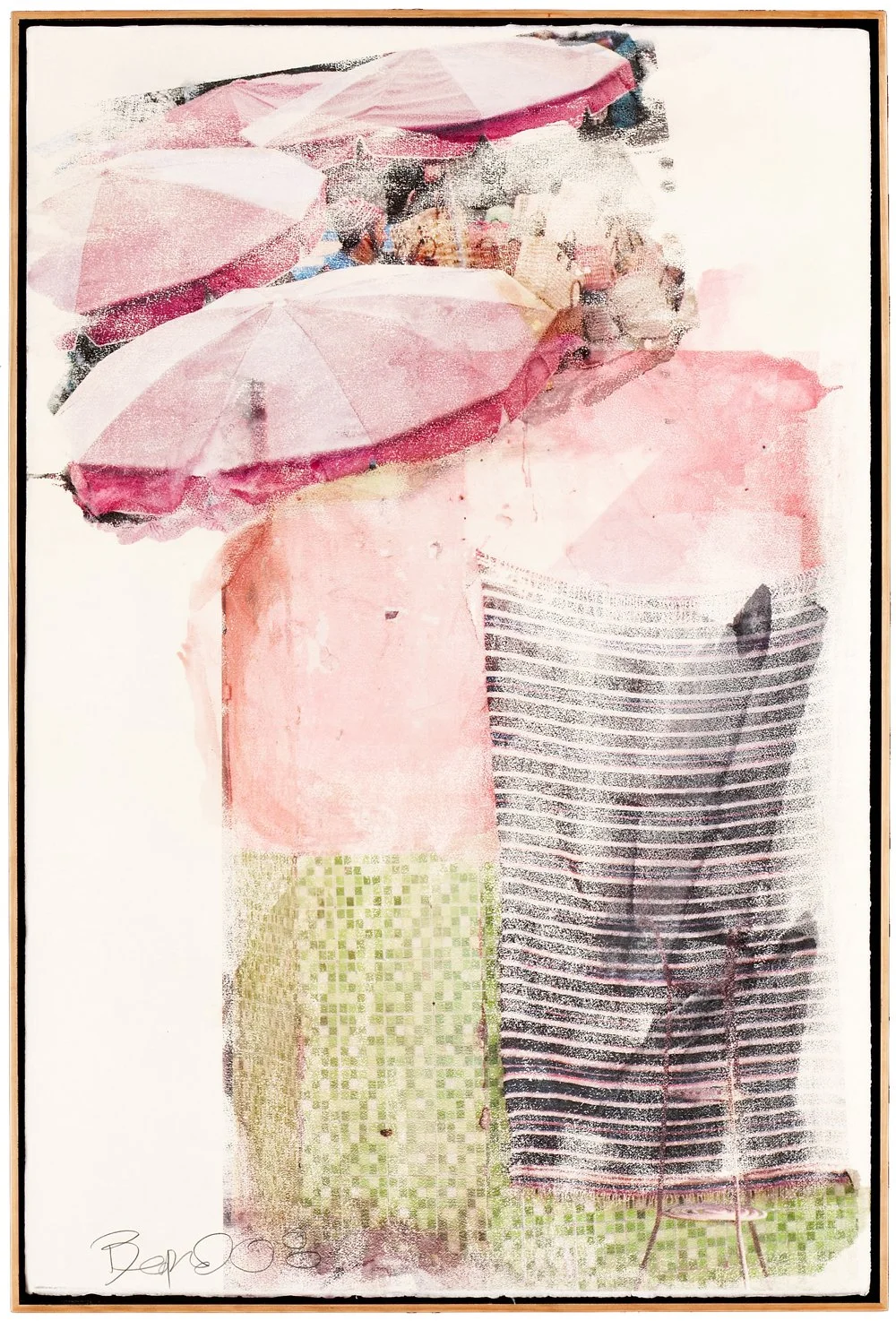
RB: I’ve never really thought of materials as just tools to make a painting. I’m attracted to things that have already lived a life before they arrive in my studio. Whether it’s an old piece of fabric from West Africa or Paris, a weathered map, a handwritten note, or a worn piece of paper from a flea market, each one carries a history. I don’t know where it’s been, who owned it, or what role it played in someone else’s life. It comes from a different place, a different culture, a different time. That unknown history is what fascinates me. But the materials themselves aren’t necessarily the subject of the painting. The subject is usually the feeling of the entire piece. The fabrics, papers, maps, and other elements all contribute to that feeling. The materials matter, but what I’m really after is the feeling they help create. The process is just as important to me as the finished work. Layers get added, removed, covered, sanded, and revealed again. Sometimes a material disappears completely, but its presence is still there underneath, affecting everything built on top of it. I like that because it’s not very different from our own lives. Every experience leaves something behind, even if you can’t always see it. By the time a painting is finished, all of those materials have blended into something larger than themselves. I hope people don’t walk away thinking about a particular piece of fabric or an old map. I hope they walk away with a feeling.
TSS: What constitutes a finished work for you?
RB: That’s probably one of the hardest questions to answer because I’m not always sure a painting is ever completely finished. For me, a painting is finished when it reaches a place where it feels complete on its own terms. That doesn’t necessarily mean everything is calm or perfectly resolved. Sometimes there’s still tension in the piece, and I actually like that. Tension can create energy, and energy can keep a painting alive. Sometimes finishing means adding another layer. Sometimes
it means taking something away. And sometimes the hardest thing is realizing that the next brushstroke isn’t going to make it better. It’s just going to make it different. I’ve learned that overworking a painting can take the life out of it. I want to leave room for mystery and discovery - for me and for the person looking at it. If I explain everything or resolve every surface, there’s nothing left for the viewer to bring to the experience. What I’m looking for isn’t perfection. I’m looking for the moment when I realize the painting doesn’t need anything else from me. Or maybe it does, and I’ve simply decided not to give it anything else. At some point I have to step away and say, “Okay... good luck.”
TSS: How do you hope viewers engage with your work?
RB: I don’t expect anyone to see the same things I see, and I don’t really want them to. Once a painting leaves my studio, it belongs as much to the collector as it does to me. What I hope is that someone spends a little time with it. Long enough for something to happen. Maybe it’s a memory, maybe it’s an emotion, maybe it’s just a bit of curiosity. Whatever it is, I hope the painting gives them enough room to bring something of themselves to it. I like the idea that two people can stand in front of the same painting and walk away with completely different experiences. Neither one is wrong. In fact, both can be right. People will sometimes point out things they see in one of my paintings that I never intended. I appreciate that they’re engaging with the work, but I don’t always want to know exactly what they see. Once someone points something out, I can’t unsee it. By the time a painting leaves my studio, I’ve lived with it for weeks or months. I’ve had hundreds of conversations with it, and it holds stories that belong only to me. I don’t feel the need to explain those stories because they’re mine. Once the painting belongs to someone else, I hope it becomes part of their story.
TSS: Is meaning something you construct intentionally, or does it emerge through the process of making?
RB: For me, meaning almost always emerges through the process. I rarely begin a painting knowing exactly what it’s going to say. If I did, I think my energy on the canvas would become flat. Usually I begin with a color, a piece of fabric, a scrap, or simply the feeling that I want to spend some time exploring. Sometimes I don’t even start with an idea at all. From there, the painting becomes a conversation. I respond to it, it responds to me, and over time something begins to reveal itself. There are moments when I make very intentional decisions, but those decisions are usually responses to what’s happening in front of me and around me rather than a well-thought- out plan. I haven’t had many of those. Then there are surprises that come from an accidental brushstroke or a spill. Sometimes those moments feel almost cosmic. For the most part I don’t fully understand what a painting is about until it’s been finished for weeks or even months. I’ll walk back into the studio, look at it with fresh eyes, and think, “Hey... that’s pretty good.” Other times I’ll look at it and wonder, “What the hell was I thinking?” I’m sure that’s one of the reasons I still enjoy painting after all these years. The work continues.
TSS: How has living and working outside major art centers affected your career and artistic development?
RB: I’ve been fortunate to spend time in places that have had a tremendous influence on my life and my work - Louisiana, New York, the San Francisco Bay Area, West Africa, Europe, and many others. Each place has left something with me. But I’ve never felt that I had to be at the center of the art market to become the artist I wanted to be. I’ve always believed it’s more important to live an interesting life than to chase what’s fashionable. The experiences I’ve had, the people I’ve met, the places I’ve traveled, and the mistakes I’ve made have all found their way into my work. I think a little distance from the art market has probably been healthy. It gave me room to develop my own voice without feeling pressure to fit into a world I didn’t necessarily belong. I’ve never wanted my paintings to be driven by the art world. I’d rather they be driven by my life.
TSS: As Robert Rauschenberg’s nephew, you occupy a unique position within contemporary art history. How has that relationship informed your understanding of artistic innovation?
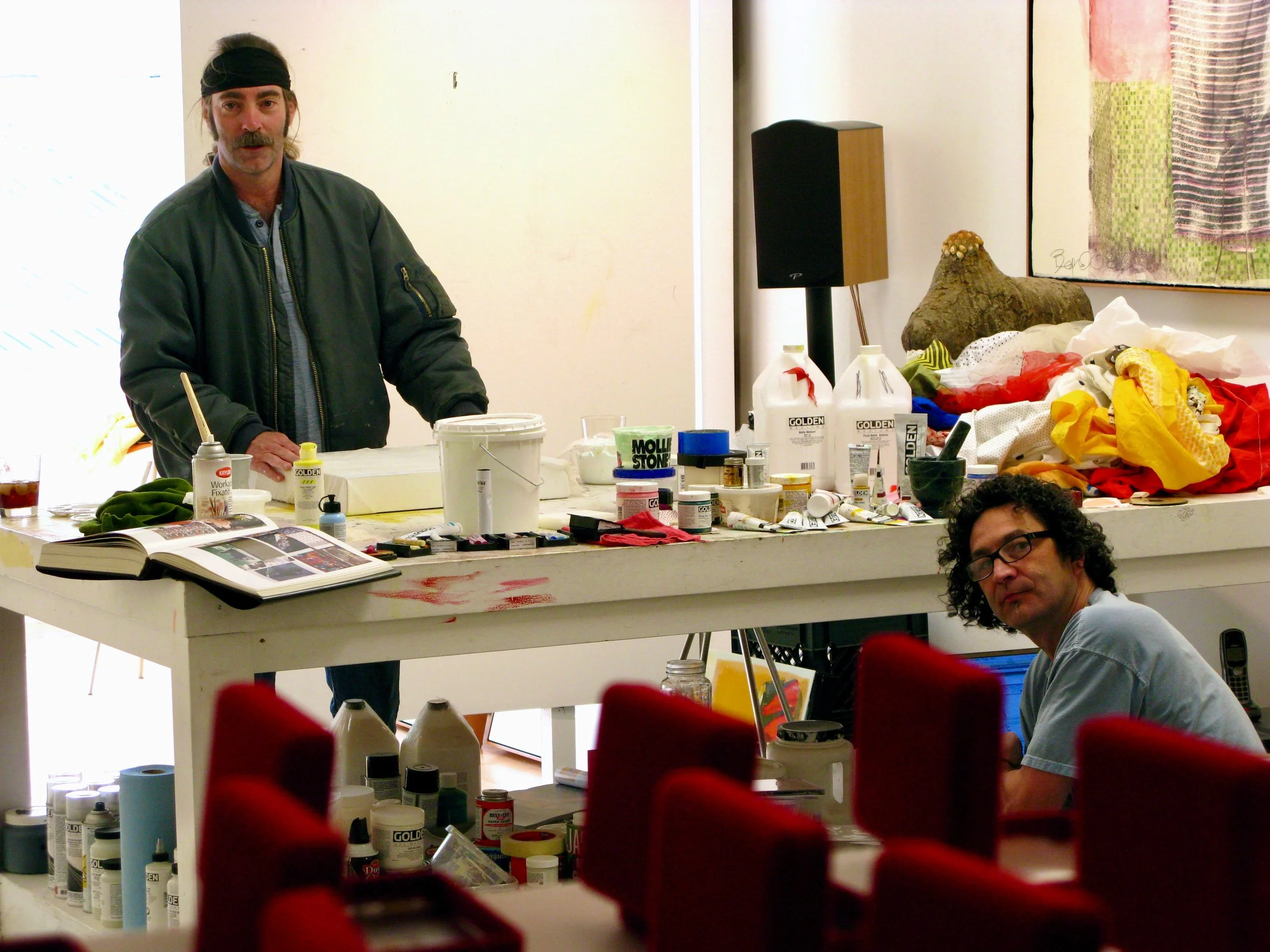
RB: Having Bob in my life gave me an education that I don’t think could have happened any other way. I wasn’t learning from lectures or books. I was learning by watching how he lived, how he worked, how he stayed curious, and how he approached every day with an open mind. What impressed me most wasn’t that he constantly invented new ways of making art. It was that he never seemed afraid of not knowing where something was going. He trusted his observational values. He experimented. I always felt like he was in a playground for grown-ups, or at least that’s how it seemed to me. He wasn’t interested in repeating himself just because something had been successful before. He wore a hole in the idea that you should always be trying new things. One thing he said has stayed with me all these years: “If you’re making art, you ought to be having fun.” That sounds simple, but it’s a profound way to approach a creative life. It gave me permission to experiment, to take risks, and not worry so much about whether every idea was going to work. i never wanted to paint like Bob. That would’ve been missing the point. What I learned from him wasn’t a style - it was an attitude. Stay curious, keep exploring, and don’t be afraid to surprise yourself.
TSS: What aspects of Rauschenberg’s practice continue to resonate with you most strongly?
RB: One moment with Bob has stayed with me for most of my life. I was visiting him in New York City when I was probably in my late teens. We were walking to dinner, talking like we always did, when he suddenly stopped on the sidewalk. We both stopped and just stood there looking at the scene in front of us. Then he asked me, “What do you see?”. I started naming the obvious things. “Trees... a fence... flowers...” He listened for a minute and then said, “Okay... what else do you see?” He pointed out the shadows the leaves and branches were casting, the reflections in the windows, and the way one object affected another. None of it was hidden - it was all right there in front of us. I just hadn’t noticed it that way before. That moment changed something for me. I found myself wondering, what if that’s the stuff we’re supposed to be looking at? I’ve thought about that moment ever since. I find myself doing the same thing every day now. I’m constantly noticing little things that other people seem to walk right past - reflections, worn surfaces, layers, textures, unexpected relationships between objects. Sometimes I wonder, “Am I the only one seeing this?” Of course I’m not, but that way of observing the world has become part of who I am. More than anything else, I think that’s what Bob gave me. He didn’t teach me how to paint. He taught me how to see.
TSS: How has your work evolved over the last decade?
RB: Over the last decade or so, I think I’ve become more willing to trust myself. Earlier in my career, I probably questioned every decision a little more. Now I’m more comfortable letting the painting tell me where it wants to go. I usually have an overall tonal value in mind, but beyond that I like to let the painting lead the way. I’ve also become more interested in simplicity. That doesn’t necessarily mean the work is simpler, but I’m less interested in adding things just because I can. I’m more interested in discovering what really belongs and having the confidence to leave the rest alone. I think I’ve also become more comfortable with mystery. I don’t feel the need to explain everything, either to myself or to anyone for that matter. I’m happier letting a painting ask questions instead of trying to answer them. At the same time, I don’t feel like I’ve arrived anywhere. If anything, I have more questions now than I did ten years ago.
I still walk into the studio wondering what might happen, and that’s usually a good feeling. It tells me there’s still plenty left to discover. I can’t honestly say I’ve ever had a painting figured out. Maybe it figures me out.
TSS: What questions are you currently exploring in the studio?
RB: The biggest question I’m exploring right now is whether I can bring a new flavor or a new combination of elements to a painting that I’ve never thought of before.I usually begin with an overall tonal value or a feeling, but I rarely know where the painting is going to end up. Somewhere along the way, something unexpected happens - a mark, a material, a relationship between two elements - and suddenly the painting starts heading somewhere I never intended. I don’t spend much time asking why I’m going to do something. I’m usually asking, “What happens if I try this?” For me, surprise has always been the answer. That’s been true for as long as I’ve been painting. If a painting surprises me, I feel like I’ve succeeded. If it doesn’t surprise me on some level, I know it’s time to change something. Maybe I enter from another door. Maybe I change the music. Maybe I open the window.
TSS: What would you like future scholars, curators, and collectors to understand about your work?
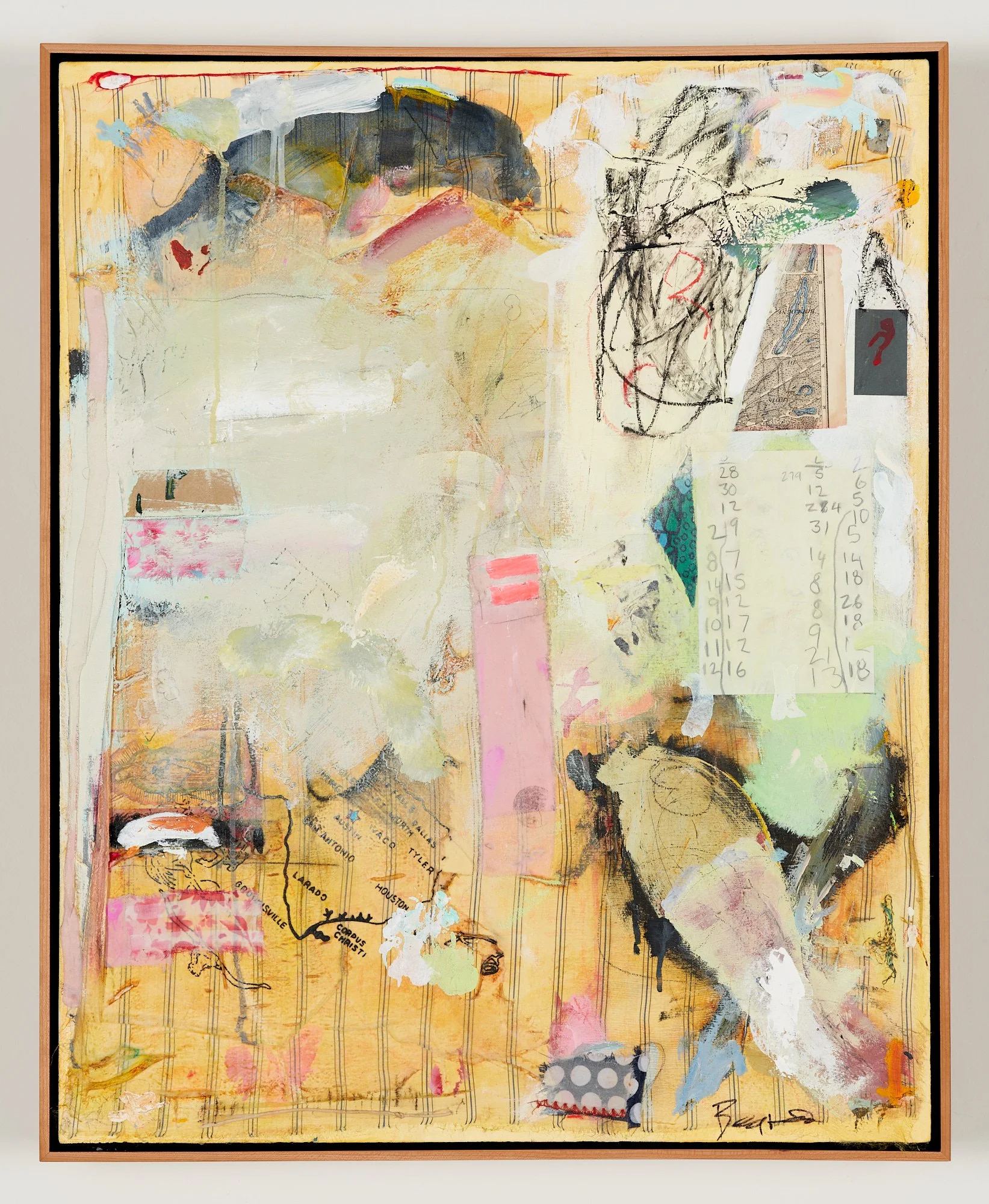
RB: I hope they understand that the work is honest. In a lot of ways, it’s a mirror of my life. Every painting carries my experiences with it. It’s like luggage. Not baggage in the negative sense, but luggage - the things I’ve carried with me through life. Some of it is right there in the carry-on where I can reach it easily. Some of it is packed away deep in the belly of the plane. And some of it is like the bags that were lost somewhere along the journey and never found. All of those experiences find their way into the work. Some I’m fully aware of, and some arrive through a subconscious connection that I don’t completely understand. By the time I’m standing in front of a painting, all of those moments - recent and distant - have somehow become part of it. I don’t set out to tell those stories directly. They simply become part of the painting because they’ve become part of me. If someone wants to understand my work years from now, I hope they see it as an honest reflection of a life that was fully lived.
TSS: What projects are you currently working on?
RB: Right now, I’m working on an exhibition in New Orleans, hopefully next spring, with James (Jimmy) Macdonell. It includes works by Jimmy, me, and Rauschenberg. One of the things that excites me about that exhibition is the opportunity to step back and think about how Jimmy and I each took our personal and shared experiences with Bob and transformed those influences into our own art practices. I don’t think either of us paints like Bob, although some people may recognize aspects of his influence in our work, and that’s probably true. Each of us found our own crooked path. I’m looking forward to sharing wall space and stories with Jimmy and seeing those conversations unfold through the work. There will also be a book connected with that exhibition. You and I are creating a book about the show and the quiet, subconscious collaboration Jimmy and I have shared in the wake of Bob Rauschenberg over the last fifty years. I’m also working on my own book. We’re rephotographing as much of my work as we can locate. I was never a particularly good record keeper when it came to where my paintings ended up. I know where some of them are, and I have no idea where others are. Tracking them down has become part of the project. It’s a much bigger undertaking than I ever imagined, and I expect it will keep me busy throughout the summer and probably well beyond that.
TSS: How do you define success at this stage of your career?
RB: I’ve never spent much time thinking about success in the traditional sense. The question I’ve always asked myself is whether I’m still excited to go into the studio. The answer is yes. In many ways, I feel like I just started painting a couple of weeks ago. I’m still learning. I’m still curious. It’s still fun. Every painting opens another door, and I honestly feel like there are an infinite number of possibilities I haven’t explored yet. I’m certainly not satisfied—and I don’t mean that negatively. I simply don’t feel finished. I wouldn’t want to stop painting today because I feel like I still have so much left to say. Working on my book has been the first time I’ve really looked back over more than forty years of work. It’s almost shocking to realize how much time has passed, because it doesn’t feel that way. Looking back, I can see a thread running through everything I’ve made, but it still feels fresh to me. It feels like I’m only somewhere in the middle of the journey. So if I had to define success at this point in my career, it would be this: that after four decades, I still wake up wanting to paint, still feel challenged by the work, and still believe my best paintings may be ahead of me.
TSS: What do you hope your contribution will be to the history of contemporary art?
RB: I’ve honestly never thought about my work in terms of the history of contemporary art. That’s a much bigger question than I’ve ever asked myself. What I do know is that my path wasn’t a traditional one. I didn’t go through the usual route of art school and formal training. My education came from living, paying attention, and being incredibly fortunate to spend enormous amounts of time with and around Bob Rauschenberg. I learned by watching, by experimenting, by making mistakes, and by staying curious. Over the years I’ve also learned from other artists, from music, travel, old textiles, nature, relationships, and everyday life. All of those experiences found their way into the work. My paintings encourage people to trust their own instincts and realize there isn’t just one path to becoming an artist. My work reflects a life lived with curiosity and openness, and maybe gives someone else permission to keep exploring, to keep experimenting, and to find a visual language that’s entirely their own.