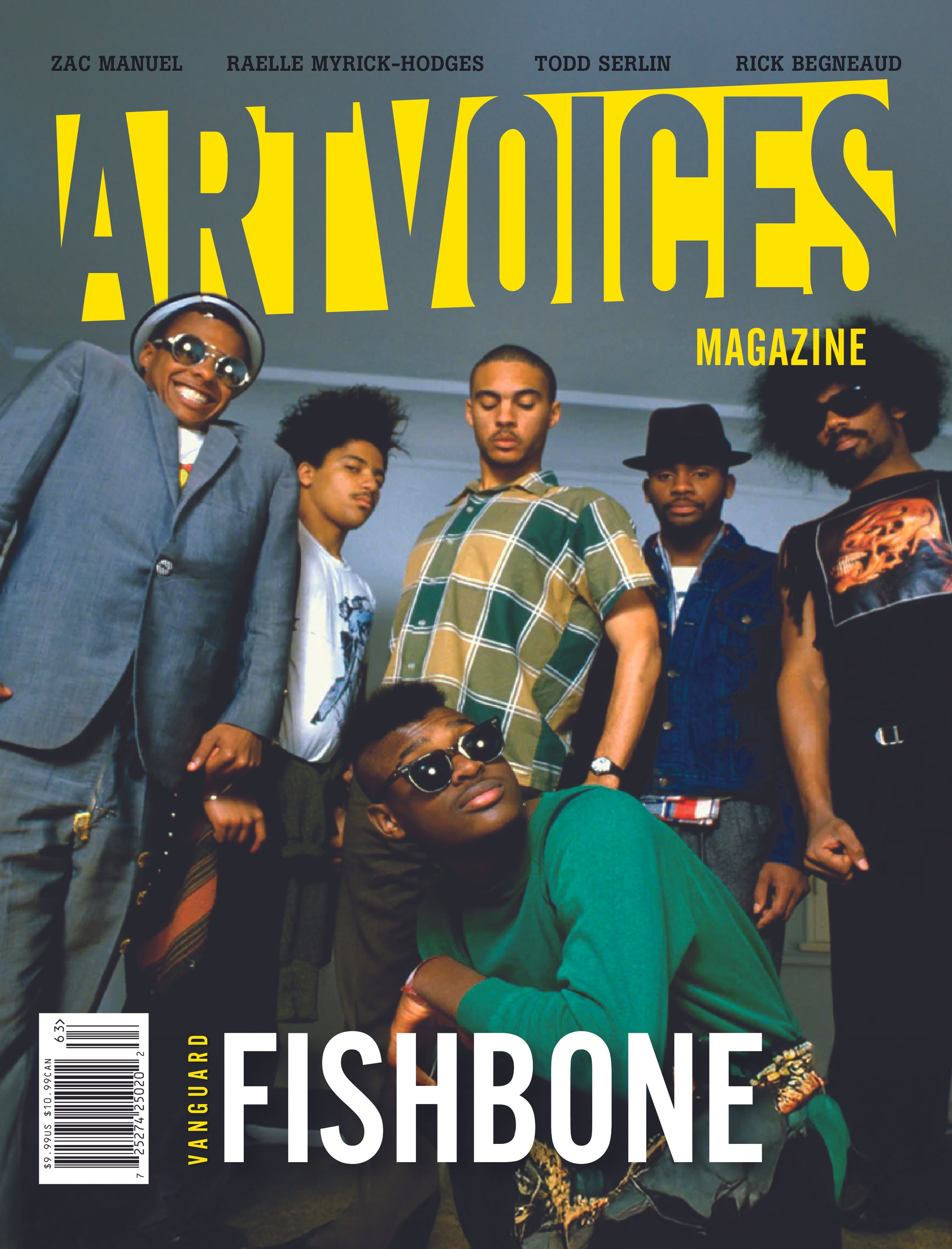
VANGUARD: BLACK ROCK DON'T STOP FISHBONE AND THE DEBT AMERICAN MUSIS STILL OWES
“But the debt is real. The debt is racial. And the debt is still unpaid.”
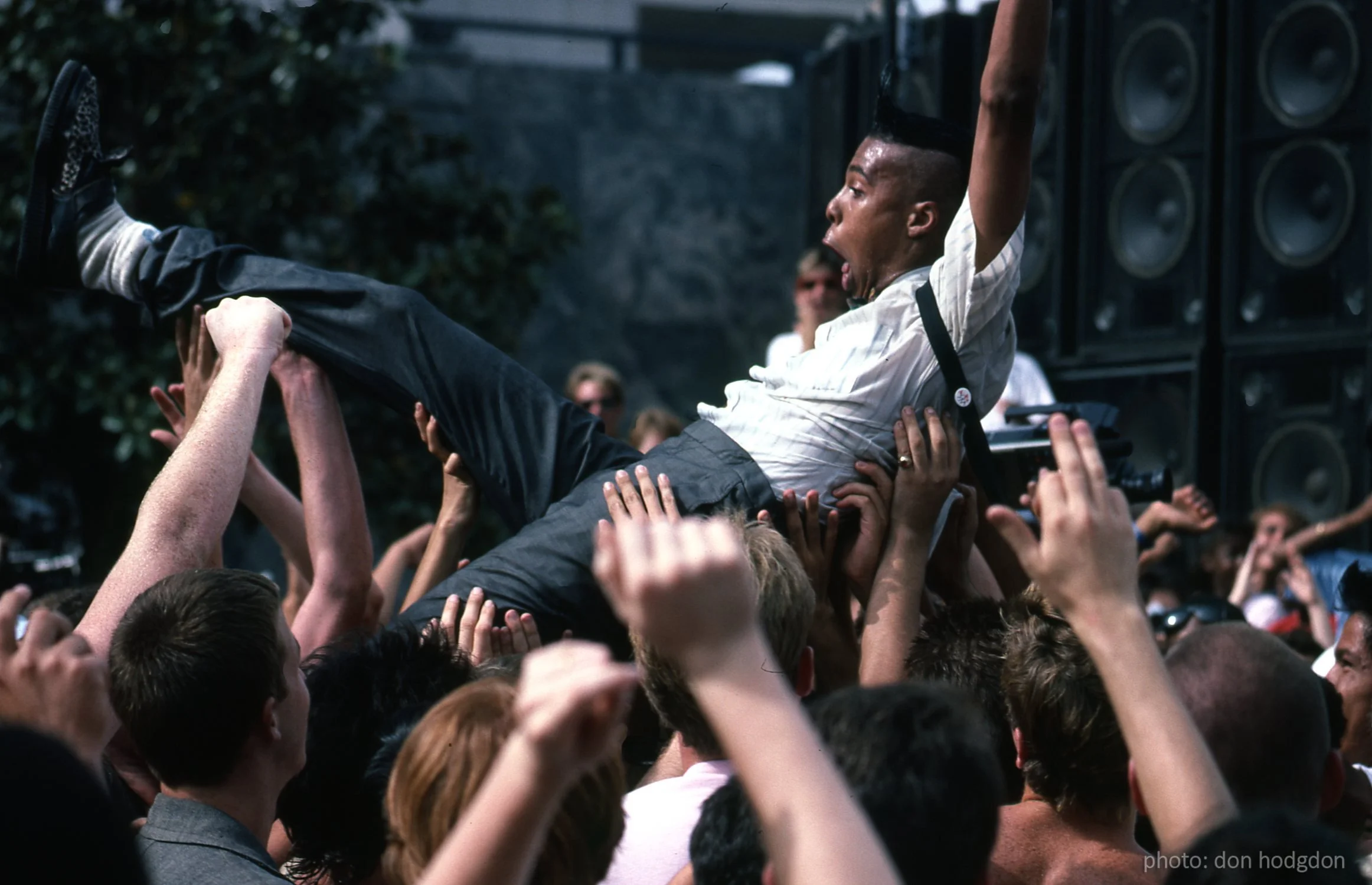
There is a particular kind of disquietude that comes from watching someone else get credit for a room you built. Then there’s the kind of grit that asks you to keep showing up, keep playing, keep believing the work matters even when the receipts say otherwise. Fishbone has lived inside this room for forty years. And the music world, for the most part, has let them. I’ve been conducting interviews with the band for a documentary called Fishbone: Unclassified.
Here is what Fishbone did. Six Black kids, mostly from South Central L.A., bused into the Valley as part of a desegregation program, found each other at Hale Junior High, and built something nobody had ever heard before. Ska, funk, punk, reggae, metal, soul with biting political commentary: detonated together at full velocity. They were teenagers. They were extraordinary.
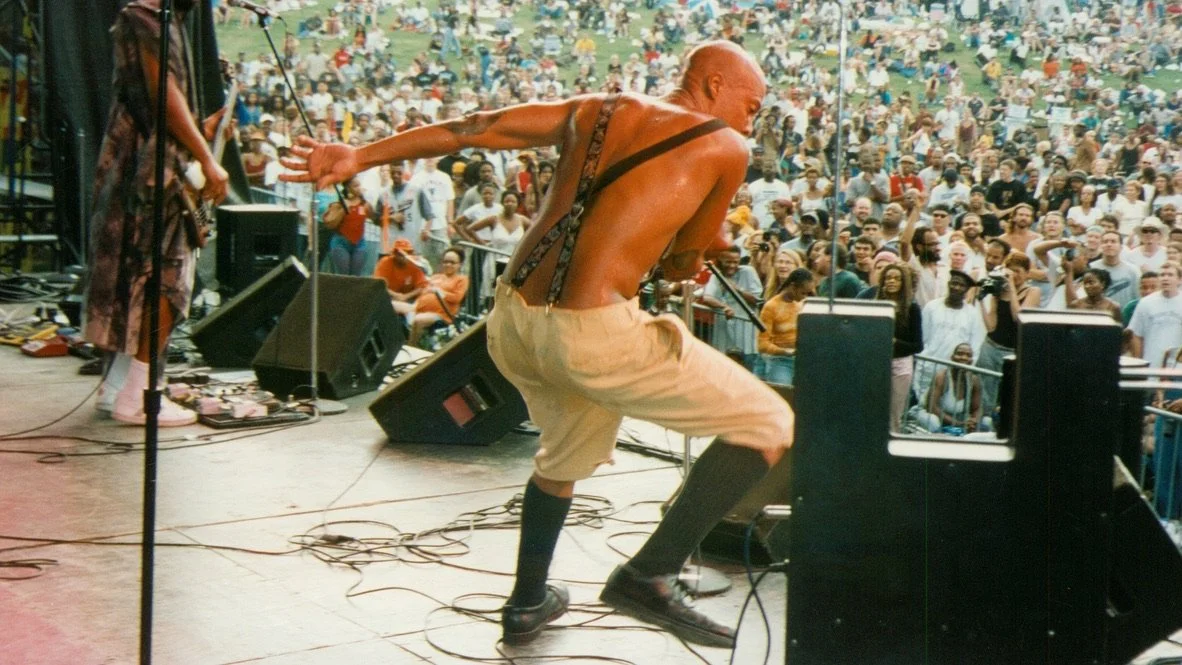
Angelo Moore, Fishbone’s electric, acrobatic frontman, the one who would later turn balcony jumps into a signature, was the exception, one of the only members who actually lived in the Valley rather than being bused there. Moore is also the only member who has remained in the band while other members have come and gone and returned. Angelo told me, “Fish called me loyal,” adding with a laugh, “A loyal dumbass.” Fish, being Philip “Fish” Fisher, Fishbone’s thunderous original drummer, would know.
I asked Angelo a not-so-simple question: what is Fishbone? I told him to forget all the canned answers. He paused. Then: “Fishbone is a cult. Fishbone is a cause. Fishbone is an empire. Fishbone is a movement.”
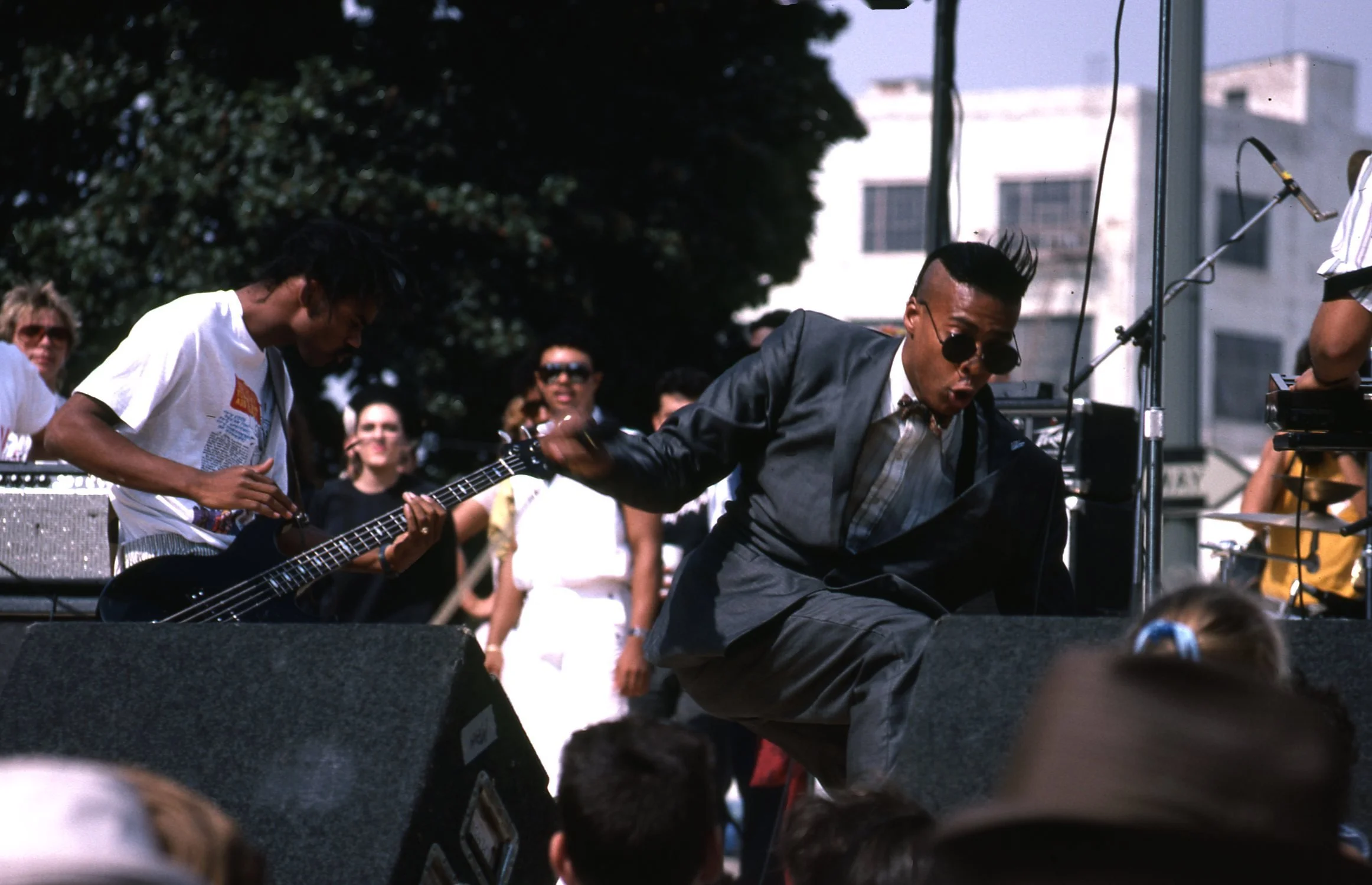
Fishbone burst onto the scene with onstage energy that was explosive, a potent “chemical combination,” as bassist Norwood Fisher describes it. Before shows, band members reportedly rubbed tiger balm on their family jewels to keep them moving on stage. A small, ridiculous ritual in service of an act that was anything but small.
The music itself was more carefully constructed than the band’s effortless delivery suggested. Kendall Jones, Fishbone’s original guitarist, whose innovative guitar arrangements became a cornerstone of the band’s genre-defying sound, described it to me this way: “I get bored with listening to just one kind of music all day, every day...so that’s how we played.”
He talked about how, growing up hearing Parliament-Funkadelic, the Specials,
Bad Brains, John Coltrane, Rush, and dub reggae on the same block, it just meant all of it was available. “We took a chance,” he told me. “As no one else would take a chance.”
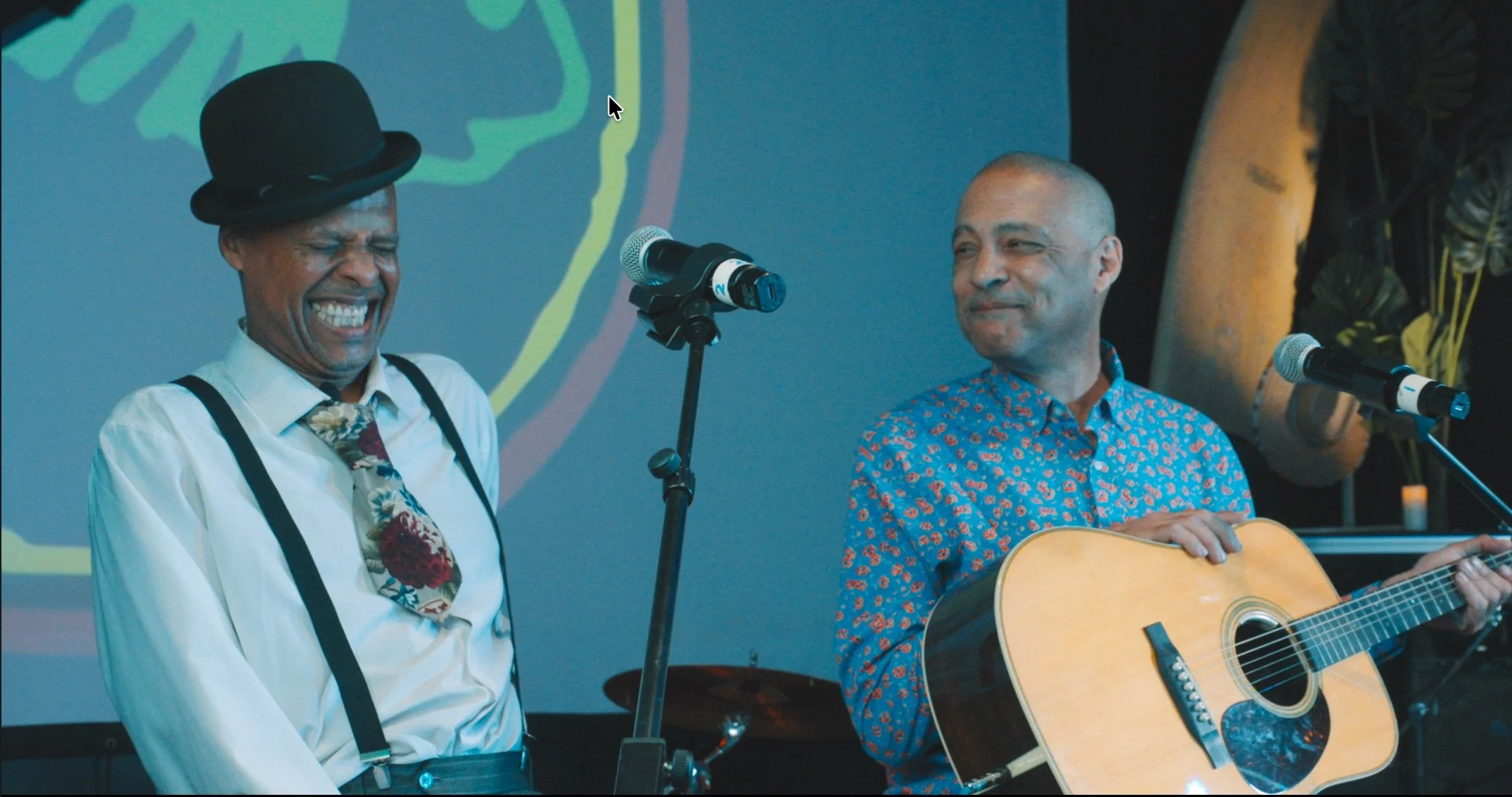
That chance produced something Kendall described with calm certainty: “I don’t think there’s anybody that’s gonna go from a 1940s type swing all the way to experimental punk meets jazz in the same song...not because we’re trying to show off, but the song called for it.”
Angelo sees things from a different angle, “Sometimes I find myself having to explain or define more rather than just getting it,” he adds. “It’s all soul music anyway.”
Dirty Walt, Walter Kibby II, the OG, the man who brought the ska element into Fishbone after his aunt’s roommate put the Specials on and blew his mind, sat with me recently and talked for hours with brutal honesty.
He talked about the Run-DMC show at the Stardust Ballroom on Sunset, where Fishbone wasn’t listed on the poster, so they jammed mic stands through the ceiling mid-performance while Ice-T watched in bewilderment. He talked about the night at the Santa Monica Civic Auditorium with Fishbone, Stetsasonic, Living Colour, and Public Enemy. When PE took the stage, and the Bloods and Crips in the crowd started throwing hands so hard, Chuck D had to stop the show. He talked about destroying LL Cool J at a New York televised concert after LL called Norwood “the Devil” before the set. “LL went out there,
he ain’t have a chance. They were still yelling for us when his ass was on. He got destroyed that night.” When I asked him what made Fishbone the live band that everyone says was the greatest they ever saw, Walt got quiet for a moment. Then: “Once we got the formula, we kept the formula. Dug into it so deep that you couldn’t dig out of it. And then, once you got that part done, you go to exciting yourself with different techniques...And then you do it again. And then you do it some more... We were successful to a point.” To a point. Three words that contain the whole tragedy.
What does “to a point” actually mean? It means this: Gwen Stefani watched Angelo Moore onstage and shaped her entire performance identity around what she saw. No Doubt went on to sell tens of millions of records. Fishbone did not. The Red-Hot Chili Peppers were Fishbone’s closest peers. They shared a house, they chanted “Fish-Bone Is Red- Hot!” at their own shows, they have cited Fishbone as an influence throughout their career, and they are in the Rock nd Roll Hall of Fame. Fishbone has not been nominated. Sublime’s manager said plainly, “There wouldn’t be a No Doubt or a Sublime if it wasn’t for Fishbone.” Sublime has sold over seventeen million records. Fishbone has spent decades selling T-shirts on tour to keep the lights on. Chris Dowd, Fishbone’s keyboardist, trombonist, vocalist, and co-founder, puts it plainly: “We were never jealous, just envious we didn’t have the same success. And there was always one thing separating us from those who did break...the unspoken truth.” And then, more directly: “Being black was 100% what held the band from breaking like all the others.” It’s the same pattern the Black Rock Coalition named and fought against forty years ago. Greg Tate, the writer and critic who co-founded the BRC alongside Fishbone’s rise, called it a creative straitjacket, the industry’s demand that Black artists conform or disappear.
This is not bad luck. This is not internal chaos, even though there was plenty of that. This is how the American music industry has always worked: take Black musical innovation, pass it through a white intermediary, sanitize the political message, and pay the intermediary while the originators scratch for bookings.
Walt knows this. He said it directly: “They’ll put some other little weak motherfucker that’s gonna copy your shit in the front. And it be white as hell. And it just gets to the point where after all that, all this, you can just get frustrated and pissed the fuck off.”
The label then uses your rage against you. Kendall described the slow burn of Columbia’s maneuvering: happy to have you when you’re doing what they want, quietly starving the promotion when you won’t. After Give a Monkey a Brain and He’ll Swear He’s the Center of the Universe, the 1993 album Kendall called “the record of its time, for its time,” the apex of everything Fishbone had been building. The president of the label came backstage at Lollapalooza and told them they needed to make another record. They’d seen no promotion for the one they had. No posters. No radio push.
Nothing. They said no. In 1995, Fishbone was dropped by the label.
I want to say something about Give a Monkey a Brain. Kendall sat with me and walked me through it track by track. The metal ferocity of “Warmth of Your Breath” (inspired, by the memory of Norwood and Walt being pulled from a car at gunpoint by LAPD as teenagers, laid out on hot pavement in front of a burned-out burger stand for the crime of making a weird turn), the longing of “Black Flowers,” the flower that grows through concrete and refuses to stop reaching, the P-Funk darkness of “Properties of Propaganda,” the prophetic absurdism of the title track itself.
Walt looked at me across thirty-three years and said: “Give a Monkey a Brain was a prophecy. And right now, we got the most foolish, most ignorant, most ridiculous motherfucker that could ever have been put in the White House. Give a Monkey a Brain was all about right there.”
Written in 1993. Playing on your speakers today.
That is what the music industry chose not to promote. That is what it let slip because Fishbone wouldn’t play differently or shrink their ambition to fit a format. As Angelo puts it: “I was asked to change my songs for the purpose of monetary gain. And even when I accommodated...that hit never came. So, what’s the point? I’ve given up on hits a long time ago.”
The irony is that anyone who knows the catalog knows it is full of hits. Scroll through the comments under any Fishbone performance on YouTube today, and you’ll find the same phrase written by fans decades apart: “the most criminally underrated band of all time.” The audience always knew. The industry chose not to.
There is real pain underneath all of this. The original band is fractured. People who built something extraordinary together are not speaking to each other. Walt told me, with a grief he dressed in profanity and humor but could not quite hide: “Brothers can’t be brothers when it’s brotherly time. Everybody’s hurt. Every single one. Everybody. The whole clan. Angelo, Norwood, Chris, Kendall, Fish, Walt — everybody’s hurt. Everybody is in pain. The deepest pain that we don’t even want to see.”
Kendall, who left the band in 1993, with more distance and more careful language, said the same thing differently: “It’s easy to think of what could have been, what should have been. But we were not has-beens. We were never washed up or anything like that, either. I guess we’re some sort of hybrid between success and failure that can’t really be put into words.”
Dowd has described it this way: “Splitting a dollar six ways at the end of a tour. Not having anything to show for all we did. What y’all saw was on stage for 30 to 90 minutes of pure magic, fire, and fury.
Nothing. They said no. In 1995, Fishbone was dropped by the label.
I want to say something about Give a Monkey a Brain. Kendall sat with me and walked me through it track by track. The metal ferocity of “Warmth of Your Breath” (inspired, by the memory of Norwood and Walt being pulled from a car at gunpoint by LAPD as teenagers, laid out on hot pavement in front of a burned-out burger stand for the crime of making a weird turn), the longing of “Black Flowers,” the flower that grows through concrete and refuses to stop reaching, the P-Funk darkness of “Properties of Propaganda,” the prophetic absurdism of the title track itself.
Walt looked at me across thirty-three years and said: “Give a Monkey a Brain was a prophecy. And right now, we got the most foolish, most ignorant, most ridiculous motherfucker that could ever have been put in the White House. Give a Monkey a Brain was all about right there.”
Written in 1993. Playing on your speakers today.
That is what the music industry chose not to promote. That is what it let slip because Fishbone wouldn’t play differently or shrink their ambition to fit a format. As Angelo puts it: “I was asked to change my songs for the purpose of monetary gain. And even when I accommodated...that hit never came. So, what’s the point? I’ve given up on hits a long time ago.”
The irony is that anyone who knows the catalog knows it is full of hits. Scroll through the comments under any Fishbone performance on YouTube today, and you’ll find the same phrase written by fans decades apart: “the most criminally underrated band of all time.” The audience always knew. The industry chose not to.
There is real pain underneath all of this. The original band is fractured. People who built something extraordinary together are not speaking to each other. Walt told me, with a grief he dressed in profanity and humor but could not quite hide: “Brothers can’t be brothers when it’s brotherly time. Everybody’s hurt. Every single one. Everybody. The whole clan. Angelo, Norwood, Chris, Kendall, Fish, Walt — everybody’s hurt. Everybody is in pain. The deepest pain that we don’t even want to see.”
Kendall, who left the band in 1993, with more distance and more careful language, said the same thing differently: “It’s easy to think of what could have been, what should have been. But we were not has-beens. We were never washed up or anything like that, either. I guess we’re some sort of hybrid between success and failure that can’t really be put into words.”
Dowd has described it this way: “Splitting a dollar six ways at the end of a tour. Not having anything to show for all we did. What y’all saw was on stage for 30 to 90 minutes of pure magic, fire, and fury. It’s what happens off the stage that you don’t see, and that’s what you call life.” The bright side: “I’m glad I’m still here,” Angelo told me, “Because a lot of people ain’t here no more.”
I have sat with these men for hours. I have listened to them describe a band that was, by the admission of every musician who witnessed it, the greatest live act anyone had ever seen. And I have watched them carry the weight of what the industry did to them alongside the weight of what they did to each other, unable, sometimes, to separate the two.
That is what happens when you build something extraordinary, and the world refuses to meet it fairly. The pressure finds the fault lines. The grief turns inward. Now, I want to make it clear that this is not a eulogy. It’s a supreme shout-out. A call to action. Fishbone still plays. Angelo is still stage diving. As of this writing, they are working on a new album.
Chris Dowd and Angelo Moore carry the original flame, joined by Tracey “Spacey T” Singleton on guitar, James Jones on bass, Hassan Hurd on drums, and J.S. Williams on trumpet. They just completed a national tour of mostly sold-out venues, drawing rave reviews from fans and critics alike. The shows are electric. The mosh pits are multigenerational. “The people that started out seeing us,” Angelo says, “now they’re bringing their kids to come see us. Telling their kids what we’re about and what we’re talking about. That right there is dependable.”
The audience was never the problem. The audience was always there, rockin’ their bells. But the debt is real. The debt is racial. And the debt is still unpaid. The only question left is whether the industry, the critics, and the culture will finally meet Fishbone where they stand. They’ve earned it forty times over.
We can take agency in Fishbone’s story. Talk about Fishbone. Stream their records. Buy the albums. Attend their shows. Grab their merch. Nominate them for the Rock and Roll Hall of Fame. Assign the stories. Write the essays. Bring your kids. Show up and be loud about it. Each of these actions is a vote in a musical democracy we can decide to seize.
Fishbone never fucking stopped. Neither should we.