POET'S CORNER: RODRIGO TOSCANO LANGUAGE, LABOR, AND THE POLITICS OF CONTEMPORARY POETRY
“Every poem is not just a means of expression, but an instrument for detecting subtle changes in the metabolism of society itself. “
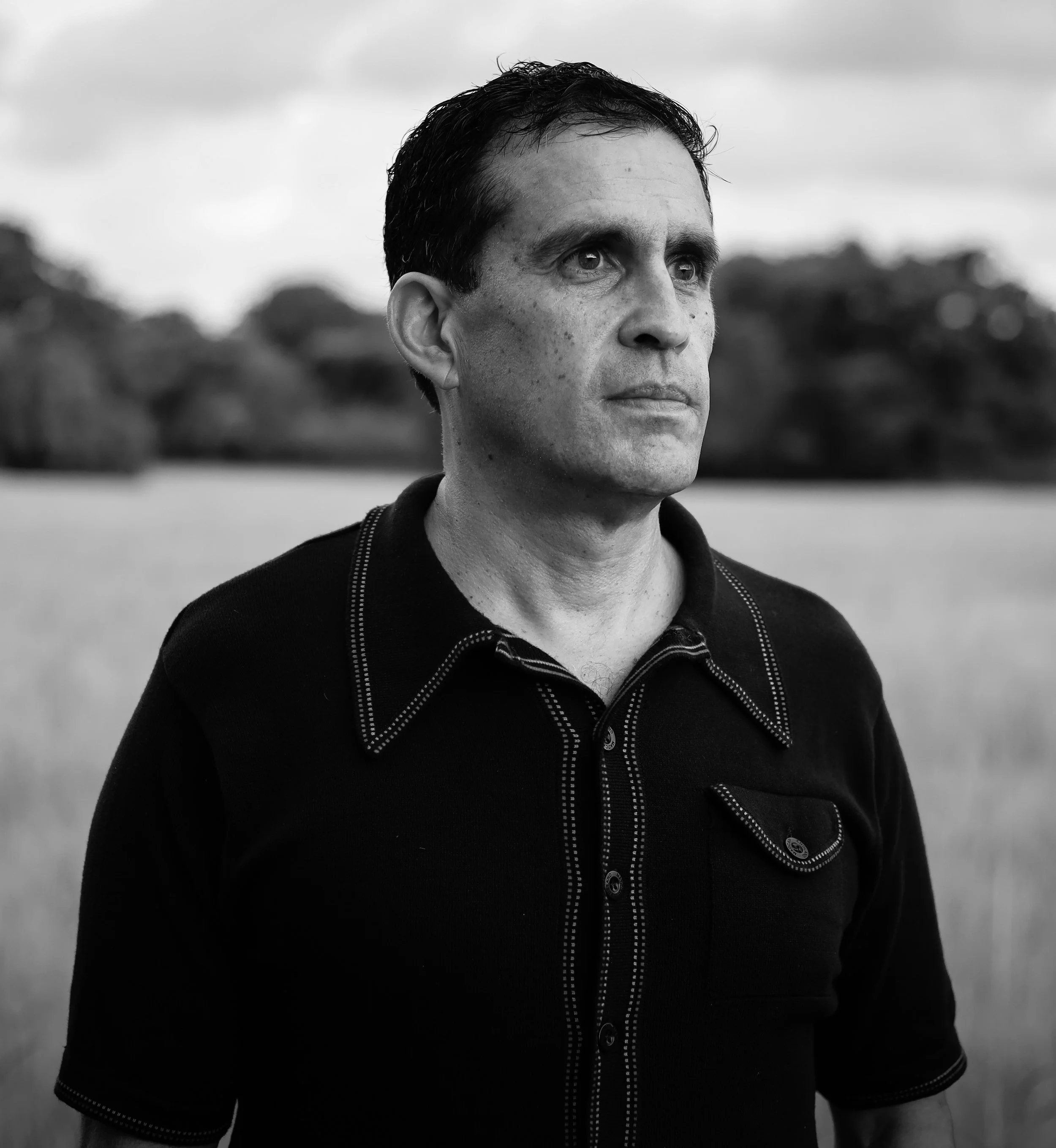
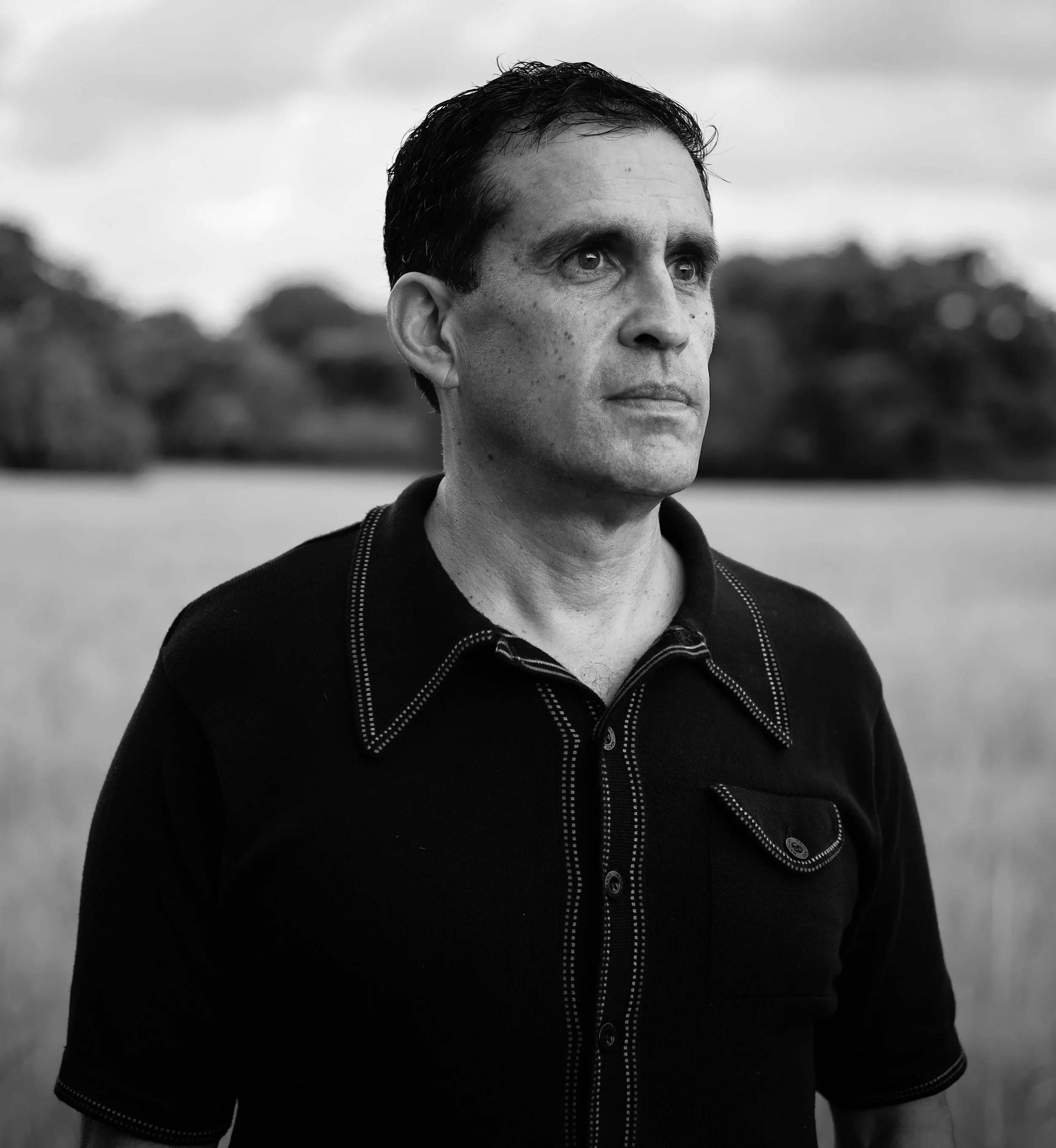
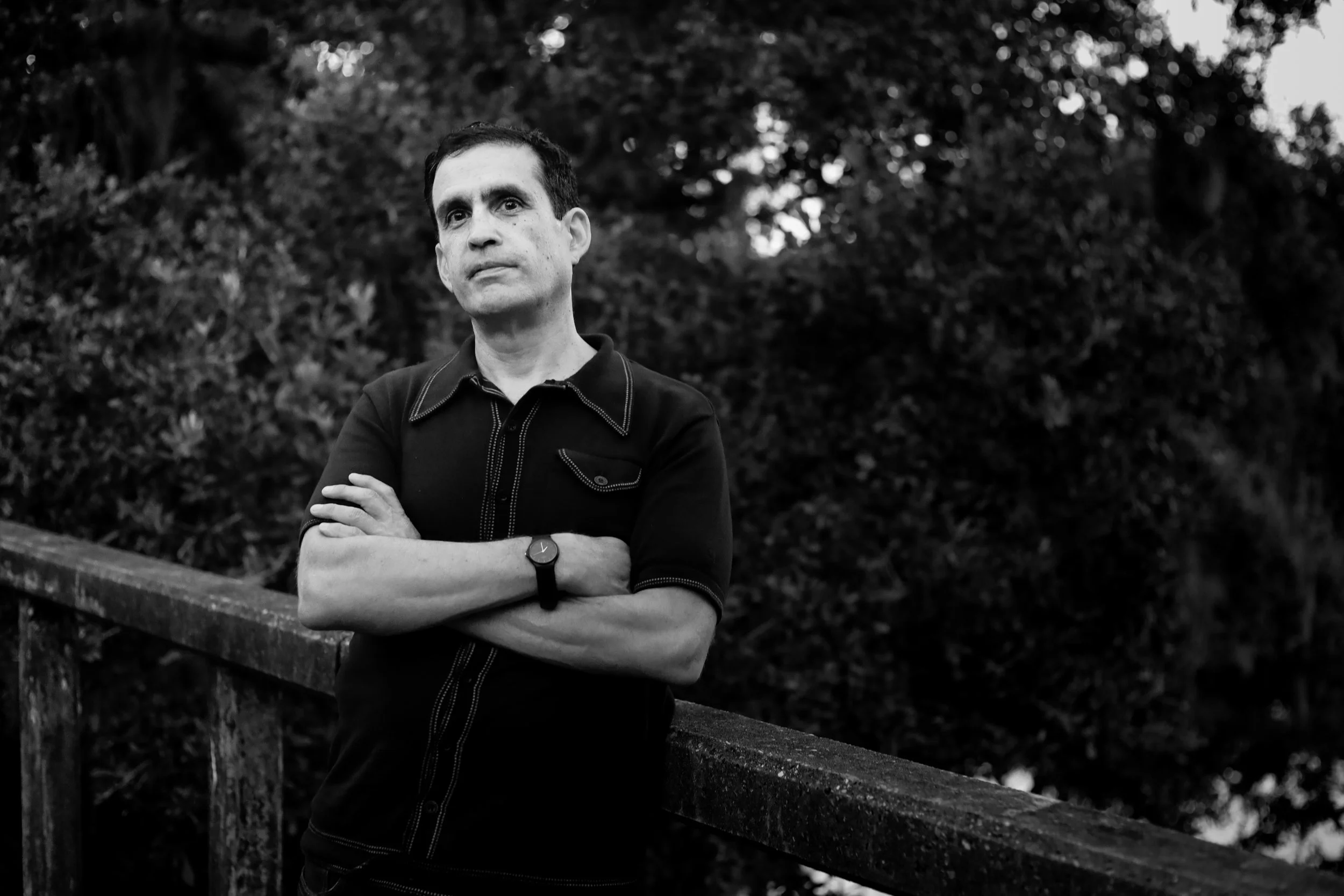
As a poet equally guided by vernacular and radical poetics, Rodrigo Toscano is the epitome of a vanguard only New Orleans can beget. His formally adventurous writing, informed by his decades of labor organizing with the United Steelworkers, resists the familiar separation between artistic practice and political life, serving as a counterpoint to an ego-obsessed culture that permeates even the depths of the underground. Neither personal confession nor ideological polemic, his work approaches language itself as a space, and the poem as a stage on which one witnesses the shifting structures of history, labor, culture, and power be born; die; reincarnated. His poems move fluidly between philosophy, economics, linguistics, and everyday speech, challenging poetry’s ability not just to say, but to think. Toscano’s body of work is his body, as alive as he is.
The breadth of the conversation to follow addresses only a microcosm of Toscano’s expansive world, spanning the topics of his work as an environmental labor organizer, the evolution of his experimental style, bilingualism and cultural identity, the role of lyric beyond the personal “I,” and his upcoming poetry collection, WHITMAN. CANNONBALL.PUEBLA. Throughout, he returns to a central conviction: poetry is not merely a form of expression, but rather a method for detecting emergent social realities before they become visible elsewhere. As such, Toscano offers a vision of poetry as a mobile and restless practice; one that continually searches for new ways of naming a rapidly changing world.
Ben Socolofsky: Thanks so much for taking the time to speak with me, Rodrigo. You mentioned that you’re in Puerto Rico at the moment. Can you say a little bit about what you’re doing there? Can you describe what you’re seeing, what conversations you’re having, or the people you’re speaking with?
Rodrigo Toscano: Yeah, so, I was in Puerto Rico for twelve days on a work assignment. I work with the Labor Institute in conjunction with the United Steelworkers (USW), my union. Among other projects I’m involved in, I’m a member of the USW Specialized Emergency Response Trainers (SERTS). We’re a team of twelve health, safety, and environment trainers that specialize in disaster preparedness and response. We work with communities in virtually every state, including its territories. We’ve been to Puerto Rico many times, mainly around issues of hurricanes. This time, we were meeting with municipalities all over the island, say a little bit about what you’re doing there? Can you describe what you’re seeing, what conversations you’re having, or the people you’re speaking with?
Rodrigo Toscano: Yeah, so, I was in Puerto Rico for twelve days on a work assignment. I work with the Labor Institute in conjunction with the United Steelworkers (USW), my union. Among other projects I’m involved in, I’m a member of the USW Specialized Emergency Response Trainers (SERTS). We’re a team of twelve health, safety, and environment trainers that specialize in disaster preparedness and response. We work with communities in virtually every state, including its territories. We’ve been to Puerto Rico many times, mainly around issues of hurricanes. This time, we were meeting with municipalities all over the island, processes that have worn out their utility, that have lost their flexibility in adjusting to new conditions. The problem of translation cuts across all manner of representation. Certainly not everything, but a lot of what poets do, is translation. Naming is the other core function.
Now, in terms of the reverse, does my work inform my poetics? Well, yes, of course, but not anywhere near exclusively. My interests and fields of study are wide-ranging: philosophy, history, ideology, politics, and all forms of emergent cultural phenomenon not easily captured by those established domains. Poetics is what allows me to jump from one domain to the other, and it’s by way of those jumps where authentically new thinking and sensations can be found. And since the nature of my job of thirty years is continuously political at the practical level, I don’t feel I need to constantly signal my stances around issues. That is, I have little use for passing off moral or ethical stances in poetry as politics. Some of the most lauded poets in the U.S, that’s all they do, preen themselves publicly through their most personal issues and quirks as if those are indispensable to society. Well, in truth they are indispensable – to academia, and its hierarchical structures.
BS: Your poetry often treats genres as porous. Is this something that comes incidentally to your work as a reflection of who you are? Or is the notion of a genre something that you’re consciously trying to subvert as a means to an end? At what point did you start writing so-called “experimental” poetry, and how did that develop? What does that label even denote in your eyes?
RT: My poetic practice began within circles that are variously labelled “experimental” or “avant garde”. By the early 90’s, American poetry had become so stale that a few dozen young poets became attracted to vanguardist approaches to poetry. A good number of influential early-late career still around today came from those circles. I’m talking about American poets, but international ones too. My first book, The Disparities, was picked up by Green Integer Books, a renowned press that specializes in experimental works. Though I self-studied a great number of historically significant works, from the classics to Elizabethan period, all the way to Modernist poetry, I was always attracted to contemporary poetry that pushed the boundaries of form. As civilizations and countries transform over time at the level of technology, industry, and culture, so too must poetic forms. Every poem is not just a means of expression, but an instrument for detecting subtle changes in the metabolism of society itself. But curiously, these days, I write in forms that are quite traditional-seeming. I have a book coming out in November titled Salvage Nation: 100 Sonnets (Winter Editions, 2026). The sonnets are all fourteen-line poems where each line is exactly ten syllables. Those constraints don’t constrain me at all. I think these days, demonstrating control over scope is the more radical move in pushing back on the logorrheic streams of so-called “content” continuously washing over us through social media.
BS: One could say that your poetry is not outwardly lyrical, meaning that the “I” is not the focal point of the work. Is this a clue as to your politics, and conversely, your poetics? What is the role of the “I” in art, and for that matter, the world at large? How do you see it functioning in art and society today?
RT: I actually think of myself as a lyric poet. And by “lyric” I mean that a compact cluster of words can be expressive of a zeitgeist. Who would argue that the Beatles weren’t hitting on overarching concerns of their time, or that Grand Master Flash’s “The Message” wasn’t encapsulating base realities of Capitalism in urban centres of those times. The question of the “I” is a whole other matter. The lyric doesn’t necessarily need an “I” for it to be
lyric. In my case, I simply don’t employ the “I” in 99% of my poetry because whatever propositions are being made in a particular poem, I can usually relate them (or translate them) without the need for an egocentring device. I don’t want people wondering what was or is going on in my head, I want people to pay attention to words – in relations to other words.
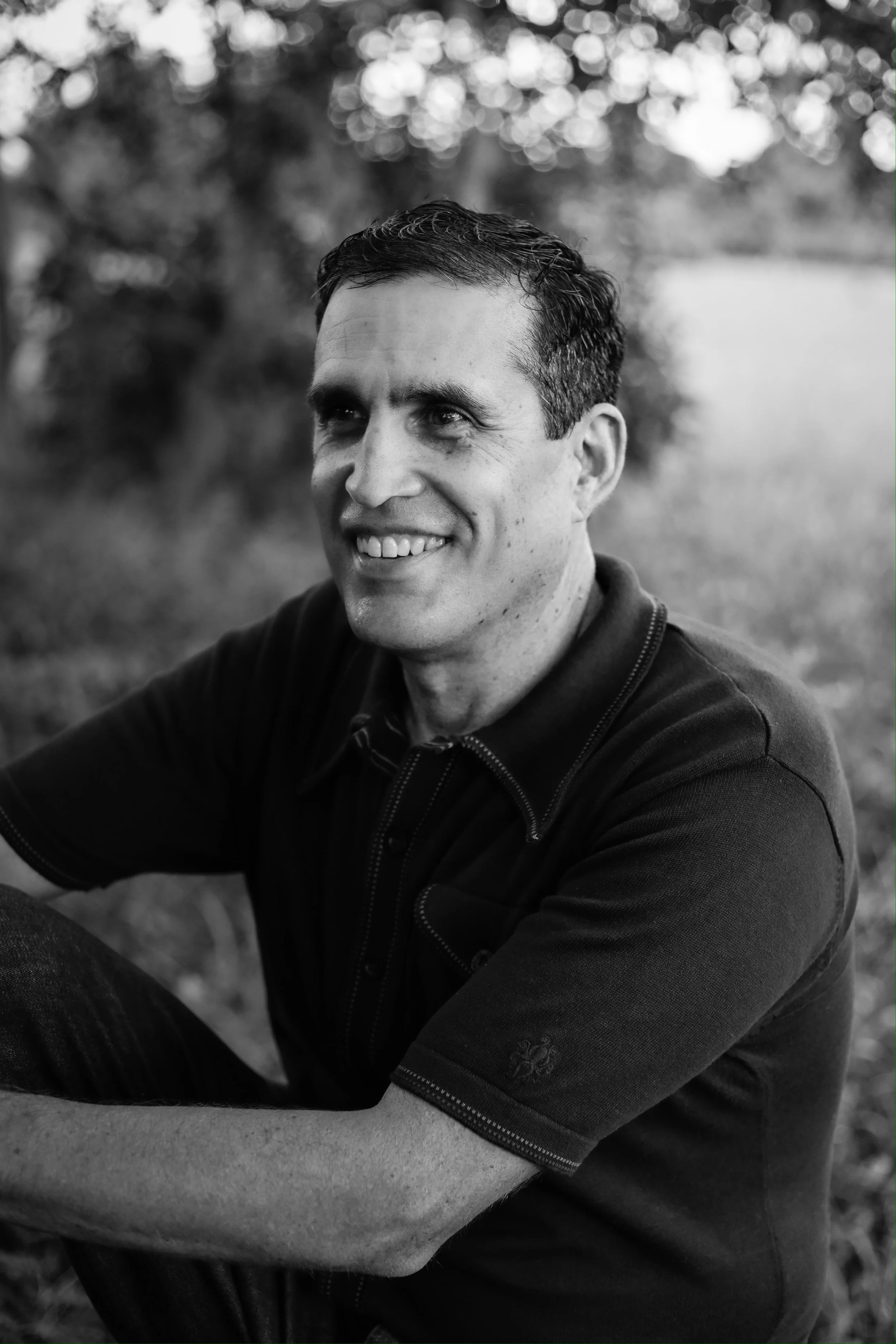
BS: You’ve been included in Best American Poetry and Best American Experimental Poetry anthologies. How does your work fit into the “tradition” of “American” poetry, if that is even
a definable tradition? With that said, what is your own relationship to American-ness? Is this relationship a mutable aspect of your work, or is it something more essential? In what ways do you view your poetry as working within that tradition, and in what ways would you say that it contradicts and expands it?
RT: I would characterize my poetry as being Greater American, as opposed to Minor (National) American. Optimally, it’s a condensation of cultural legacies spanning from the whole hemisphere. Well, that’s the horizon at least, the most ambitious reach I can strive for. At a shorter bandwidth, I would say that yes, my poetry is “American” because it’s written in the American English of my time. And I am a passionate student of that speech. I believe that to write well in a particular language, one has to be devoted to that language. I can talk for hours about the features of the English language.
You know, and it’s a hybrid language, a marvellous blend of Anglo-Saxon and Latin-based Norman French, in the main. That’s one thing right there that I look for in upcoming poets. Are they fully aware that they can lean one way or the other in working with those two roots? And how do they come up with specific blends?
RT: In terms of how I feel and move in the world, culturally speaking, I would say that I am bicultural and bilingual. I feel reasonably at home in Hispanic culture and Anglo culture. I can fluently speak, read, and write in both English and Spanish. It can be the case that some people are bilingual but not necessarily bicultural, or the converse – bicultural but not bilingual. Now, historically, and presently, Anglo- Capitalist culture has been venturing to dominate Hispanic culture, and nations, no less. In that case, I lean into an overall Hispanic outlook, a historically situated amalgam of Ibero- Indigeno-Africano blended culture as a base of resistance to Anglo- Imperialist incursions. My recent book, WHITMAN.CANNONBALL. PUEBLA. ranges over those concerns.
BS: You’ve been on the board of directors for the New Orleans Poetry Festival since 2016, and you now live and work here. In what ways does New Orleans, as a city with its own deep labor history, environmental vulnerabilities, and immigrant communities, hold a dialogue with your work?
RT: Oh, my goodness. It’s often been said, and it’s ever so true that New Orleans is a hub of global culture. Go almost anywhere in the world and you’ll find traces of Louisiana music, from the blues to jazz and all the genres that followed in their wake. It’s not too bold to say that New Orleans is a center of civilization, like Mexico City, New York, etc. Of course, it’s also the northernmost Caribbean city. And when we talk about historical labor “movements” in the United States, there is no greater “movement” than the transition from chattel slave labor to wage labor. And think of all the sub- movements – at a cultural and economic level that flowed from that titanic page turning of history. All that figures into my thinking, including the Haitian Revolution of 1791. That was a global event. And much of its effects, cultural and political, embarked on these shores, and irrevocably transformed this nation.
In terms of the New Orleans Poetry Festival, it started as a local event eleven years ago, and since then it’s grown to be an international event. For four days every year in April, we have hundreds of poets participating in panels, readings, workshops. The festival has become a focal point for poets from every state. The reputation of the festival is that it’s a place for alternative (not strictly academically based) poetics to flourish. But also, New Orleans has become a destination for poets to move to. There’s a thriving scene here now that rivals New York and Chicago. Per capita, we have more reading series than those cities. And New Orleans itself provides the cultural template for our whole scene. We’re all motivated to be as generous as possible with our community members as well as visitors from out of town.
BS: Given that so much of your activism centers on environmental and proletarian justice, and seeing as New Orleans sits at such a fraught intersection of those issues (the Gulf Coast petrochemical corridor, climate exposure, the legacy of Katrina, to name a few) does this city feel like a natural home for the work you do, or does it present new challenges and perspectives?
RT : The nature of my work is national in scope. For example, I’ve been working with Native American tribes in the northwest (Yakama, Umatilla, Nez Perce) for twelve years now. The projects involve helping the tribes build health, safety, and environment infrastructure on tribal lands. The work involves remediation of hazardous waste dumped by the military industrial complex coupled to workforce development goals. My work intersects tribal, municipal, state, and federal agencies such as the National Institute of Environmental Health Studies and OSHA. What I mean is each region and city of the United States, including New Orleans, comes jam-packed with challenges. I suppose I get closer views into many of those than most people. And it’s sad (and infuriating) to say that too many of those challenges aren’t being met head on. We increasingly live in a kleptocratic and oligarchic society, where what we need is a whole new direction built on strong doses of socialism.
BS: In an early episode of the podcast PoemTalk, #17, the participants discuss your poem “Poetics”, with one participant ultimately deeming the poem as “decadent,” “exclusive,” “illegible.” Do you agree? What’s your relationship to illegibility? Is it a poet’s job to be legible? Needless to say, much has changed in both the poetry world and the world at large since you wrote the poem twenty-five years ago - how would you write that poem differently today? How have your poetics and politics evolved since you wrote your book “Platform?”
RT: Well, the person that said (in a moment, I believe, of stumbling rivalry) eventually lurched so far to the fringe right that he and his wagon of “legibilities” virtually disappeared from all current literary maps. But that doesn’t disqualify questions of apprehension, or better put, reading practices. I don’t in the least disavow that poem nor any other poem in Platform. The literary (ideological) task at that point (circa 2001) was to find completely different ways to read poetry, and thus, radically different ways to write them. Every era has its challenges. All that said, yes, I have evolved as a translator of my own poetics. Of course, I’m not going to be writing like I did in Platform, for neither better nor for worse.
Some people say I’m rather prolific in terms of the books I put out, but I don’t see it that way at all. I feel I’m responding to the fast-changing world we live in, racing to catch up. But
also, like I said before, poetics, at its best, is also trying to get ahead of the curve. Poetry can do that, detect social phenomena that haven’t yet reached the level of discursivity. This is why it’s often an irritant to other genres; it comes off as not “fully formed.” As for me, why would I want to write reams of epitaphs to previously established thoughts and sensations? My model is at all times J.S. Bach. Give me a smidgeon of a figure, and I’ll weave something out of it like you’ve never heard.