SUNSET LIMITED: AMY CONNER UPCOMING NOVEL 'BUG' NARRATIVE IDENTITY, AND THE HUMAN CONDITION
“In Bug, Amy Conner writes about captivity, cruelty, the fragile work of seeing clearly and the peculiar glamour of ruin.”
There are novels that wound and novels that seem, impossibly, to press on the wound. Amy Conner’s Bug belongs to that second, rarer category: a book of startling beauty and controlled brutality, attuned to the ways tenderness can become perilous and survival, from the outside, can resemble surrender. Told through Eden Palliser and Sweetpea Bird’s alternating consciousnesses, the novel traces damage in a world where care is demanded, exploited, and sometimes returned as grace.
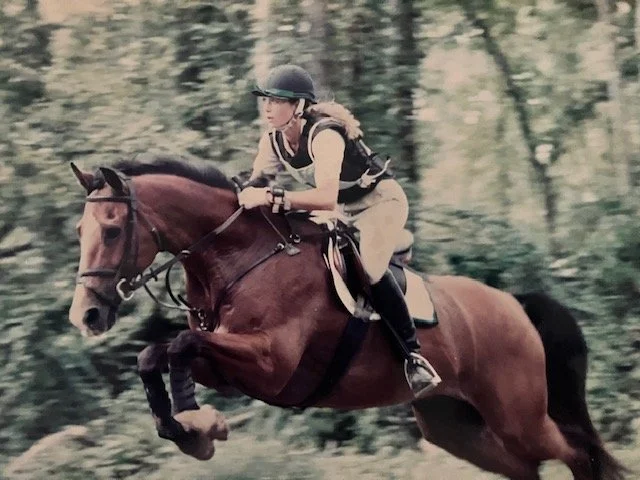
The title comes from horse racing: a “bug” is an apprentice jockey, necessary and expendable, prized for lightness and risked for profit. Conner understands the metaphor’s cruelty. The word describes not only Sweetpea’s place in the racing world but the novel’s larger economy of disposability—who is trained to endure, who is trained to command, and who gets called gifted when what they have really become is adaptable.
Conner’s novel has been described as a collision of Gone Girl
and National Velvet, but its truer ancestry lies in the Southern gothic’s preoccupation with inheritance, violence, landscape, and grotesque humor. Like the best of that tradition, Bug is interested less in spectacle than in atmosphere: the long heat of consequence, the privacy of humiliation, the peculiar glamour of ruin.
Set in the Mississippi Delta in the early nineteen-eighties, and later along the Gulf Coast, the novel has the compositional force of film without surrendering prose’s inwardness. Barns, piers, summer rains, kitchens, gardens, long hot roads: each appears not as backdrop but as pressure system. The landscape does not explain the characters so much as it conspires with them, holding their secrets in plain sight.
Eden Palliser, a wealthy eccentric devoted to horses, meets Sweetpea Bird, whose poverty and uncanny self-possession expose the fragility of Eden’s privilege. Their relationship is one of the book’s strangest achievements: not rescue, not sentiment, but recognition. Each sees in the other a different arrangement of captivity.
The novel’s violence is psychological before it is physical. Conner resists the easy vocabulary of diagnosis, even when the dynamics she depicts—adoration followed by withdrawal, intimacy followed by punishment—will be recognizable to anyone familiar with coercive control. Instead, she renders abuse as weather: immersive, distorting, almost metaphysical. The result is not clinical clarity but moral dread.
Doc Charlie, the novel’s most chilling agent of disorder, manipulates with the calm of someone who believes the world exists to be rearranged around his appetites. Women, horses, and children become materials to be handled and remade. Conner’s great insight is that such remaking is erasure. What masquerades as possession is hollowing out: the void asking to be fed. Eden’s tragedy is that she has been taught to mistake diminishment for devotion. Her wealth and beauty do not protect her from being made smaller; they become part of the spectacle of her undoing. She knows Charlie’s presence with bodily certainty, and one of the novel’s most devastating lines captures the paradox of her effacement: “I knew Charlie was there like I knew I wasn’t.”
Sweetpea, perceptive and androgynous, becomes the book’s moral instrument. Their gift is not innocence but attention. In a gendered order that rewards aggression and mistakes nurture for weakness, Sweetpea’s refusal to be neatly classified becomes resistance. Their voice is lucid, watchful, and unsentimental; it keeps the novel from collapsing into Eden’s sorrow alone.
Bug is, at its core, a novel about perception: who is permitted to see clearly, who is punished for seeing, and what it costs to name cruelty in a world invested in calling it love. Conner’s prose is lush without being decorative. You can smell rain coming, feel mud’s heat and stickiness, sense sweat under tack leather and floodwater rising at the edge of a sweltering room. Yet every sensory pleasure carries a bruise. Beauty is not an escape from violence but one of its conditions.
Conner’s earlier novel, The Right Thing, announced her interest in Southern manners as both shelter and camouflage. In Bug, that interest has sharpened. Politeness becomes a form of enclosure; eccentricity, a privilege distributed unevenly. The old Southern tolerance for the odd and damaged—so long as they know their place—hovers over the book like humidity. Men are permitted mythologies. Women are given reputations.
This is where the novel’s horse-world setting becomes more than atmosphere. Racing is a theatre of discipline and danger, a place where bodies are measured, trained, wagered on, and praised for obedience. Conner draws the connection without overexplaining it. The track and the household mirror each other; both are systems in which power calls itself expertise.
If there is healing in Bug, it is not the tidy healing of revelation. It is harder won and less photogenic: self-knowledge, interconnection without possession, love without domination, survival that begins as endurance but cannot end there. Conner has written a novel about broken people without making brokenness their deepest truth. The book’s final force lies in its insistence that tenderness, though repeatedly weaponized, remains worth defending.
Interview with Amy Connor
Sabrina Canfield: The word “bug” has a specific meaning in horse racing, but it also suggests vulnerability and disposability. When did you know it would be the title?
Amy Conner: The original title was Snake, and it didn’t sell with that title. She suggested Bug, which was less threatening but still carried the right charge. A bug is something we step on without thinking. That’s the vulnerability part. But it also suggests a kind of caste position—not simply lower class or impoverished, but almost no class at all. Ubiquitous. Overlooked. As Jesus says, “The poor will always be with us.” So too will bugs.
SC: Eden is privileged and powerful, yet profoundly vulnerable. How did you think about writing a character protected by class but endangered by gender, trauma, and intimacy?
AC: Her father praises her for having the brains and guts to take what is hers, but that is one of the only times anyone says she has what it takes to stand on her own. Everyone else looks at her through a double standard: You don’t have power, you can’t have power, but why don’t you act like you have it? Eden acts out from frustration and rage familiar to many women, only more violently. What may look like instability is also the result of being trapped inside impossible expectations.
SC: Sweetpea’s voice feels unusually clear-eyed. What did that character allow you to see that Eden could not?
AC: Sweetpea is extremely observant, but also subject to the illusions we all create. Sweetpea wants to see Eden as a goddess, and so does. I wanted readers to understand how we decide on an illusion of someone and then look only at the facts that support it. Sometimes, when you are finally ready to see the whole picture, the truth descends all at once. Then you cannot unsee it.
SC: God and spirituality are central to the novel. Do you think they are central to great fiction?
AC: I did not set out to write a novel with this much God in it, but it became inevitable because of the themes, and because Eden insisted on her voice. A big part of that voice is railing at God. I had to rein it in by telling her no one was ever going to read the book if she kept it up. Sweetpea, meanwhile, has been raised in a godly household. I
had to let both characters speak. They wanted to talk about God, and they were not going to let me do it any other way.
SC: You have said there is a kind of untruthfulness in Sweetpea. What did you mean?
AC: Not untruthfulness exactly—more an ability to withhold. Sweetpea plays things close to the vest and does not tell the reader everything. Eden understands that, because Eden also does not tell the whole truth. Their silences recognize each other.
SC: What did your experience with horses teach you, and how did it shape Sweetpea’s voice?
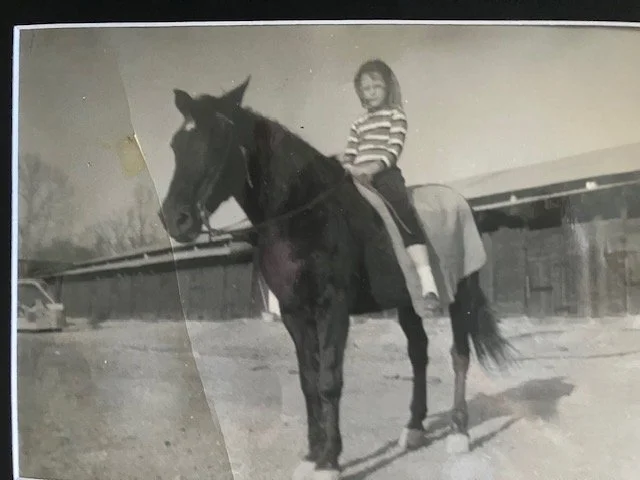
AC: What Sweetpea says about animals is true: they are always talking to us, all the time. That is why I gave the horses a voice through Sweetpea. When I was a horse trainer, I began to understand that horses were not trying to tell us things so much as broadcasting them. Once I saw that, I could not unsee it. I would try to teach someone that their horse was terrified, not disobedient, and they often had no idea.
I felt sorry for horses at shows. They often had no idea what was about to happen to them, and their trainers had not learned how to communicate. Those horses were on their own We need to pay attention not only to animals but to the whole world. The older I get, the more convinced I become that everything is speaking to us—even inanimate objects, even rocks. When we focus only on humans and our pets, we court our own doom.
SC: What is the difference between memory and remembering?
AC: Remembering is immediate. Suddenly you are eight years old again. It is not a flash so much as a wave. Imagine if the whole thing played out inside you—inside your head and heart—and you had to feel what you had spent your life running from, what you had put in a box. Eden is afraid all of memory will fall on her at once and she will not survive it. Remembering crashes down like a tsunami: not one wave, but a surge. The water rises, and then it keeps rising.